What Is the Unbeatable Waterproof Makeup Bag Tailored for Steamy Southeast Asian Climates?
What Is the Unbeatable Waterproof Makeup Bag Tailored for Steamy Southeast Asian Climates?
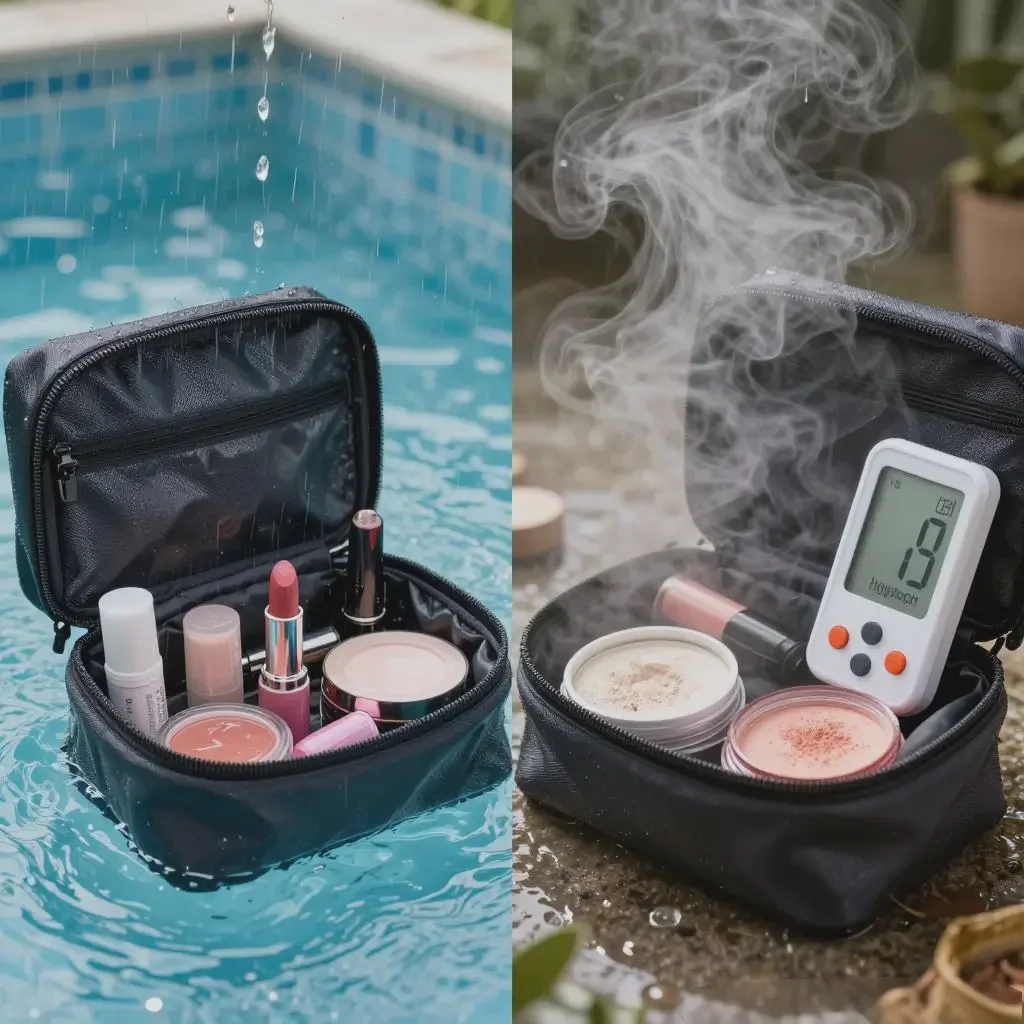
Traveling or living in Southeast Asia means surrendering to a climate that's equal parts beautiful and brutal for your beauty routine. The relentless humidity hovers between 70-90%, sudden monsoon rains appear without warning, and sweltering temperatures regularly exceed 30°C (86°F). In this environment, a standard makeup bag isn't just inadequate—it's a liability. It becomes a petri dish where powders cake, creams separate, and mold silently claims your favorite products. The promise of "water-resistant" fabric dissolves in the first tropical downpour. The challenge isn't just keeping water out; it's managing the omnipresent moisture while protecting contents from heat-induced meltdowns.
The unbeatable bag for Southeast Asia is a feat of climate-specific engineering. It combines a fully waterproof, welded-seam exterior with an anti-microbial, wipe-clean interior and employs smart material science to regulate the micro-environment inside. It must be a fortress against external rain, a dehumidifier for ambient moisture, and a buffer against tropical heat, all while remaining organized and portable for adventure.
Finding this unicorn requires moving beyond marketing claims to understand the specific threats and the technologies that truly counter them. Let's define the anatomy of the perfect humid-climate warrior.
To identify or build the ultimate bag, we must dissect the unique challenges of the Southeast Asian climate, examine the non-negotiable construction features that provide true defense, explore the interior systems that preserve different product types, and finally, learn the daily protocols to maintain its protective power.
The Triple Threat: Why Does Southeast Asia's Climate Devour Regular Makeup Bags?
To defend against an enemy, you must first understand its tactics. The Southeast Asian climate attacks your cosmetics with three synchronized assaults that overwhelm ordinary bags: atmospheric humidity, liquid water, and ambient heat.
The region presents a lethal combination of high relative humidity, intense rainfall, and sustained high temperatures. Humidity permeates seemingly sealed spaces, causing powders to absorb moisture and harden. Torrential rain tests the limits of water "resistance." Heat softens wax-based products and accelerates chemical degradation. A bag designed for one of these threats will fail against the coordinated attack of all three.
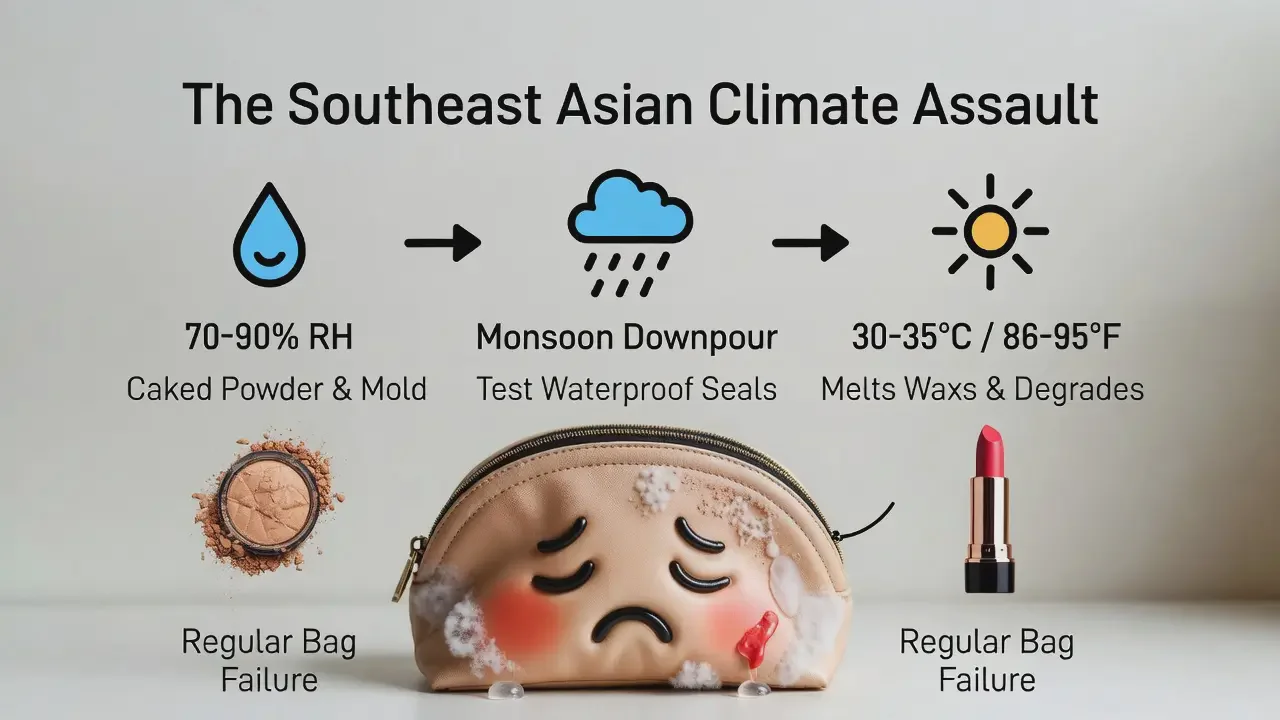
Let's quantify the threat. Relative Humidity (RH) in cities like Bangkok or Singapore regularly exceeds 80%. At this level, hygroscopic products (powders, certain creams) will actively pull moisture from the air, leading to texture changes and hardpan. Rainfall isn't a drizzle; it's a vertical deluge that can find the microscopic weakness in a stitched seam or a standard zipper. Ambient heat means your bag, left in a non-air-conditioned room, a tuk-tuk, or even in checked luggage on the tarmac, can reach temperatures that compromise product stability. A bag that only addresses one vector—like a rain cover without a moisture-wicking interior—will still lead to product ruin. The solution must be holistic.
Fortress Construction: What Makes a Bag Truly Waterproof and Mold-Resistant?
The foundation of an unbeatable bag is its construction. Terms like "water-resistant" or "weatherproof" are meaningless here. We need specifications that guarantee performance under duress: waterproof materials, impenetrable seams, and bioactive defense systems.
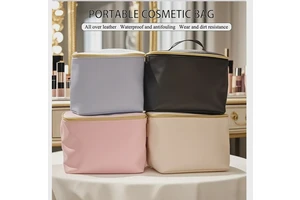
True waterproofing requires impermeable laminated materials (like TPU-coated nylon), fully welded or heat-sealed seams (no needle holes), and waterproof zippers with backing tape (like YKK AquaGuard®). Mold resistance demands an interior lined with an anti-microbial treated, non-porous material (e.g., TPU with silver-ion treatment) that can be wiped completely dry and doesn't absorb moisture.
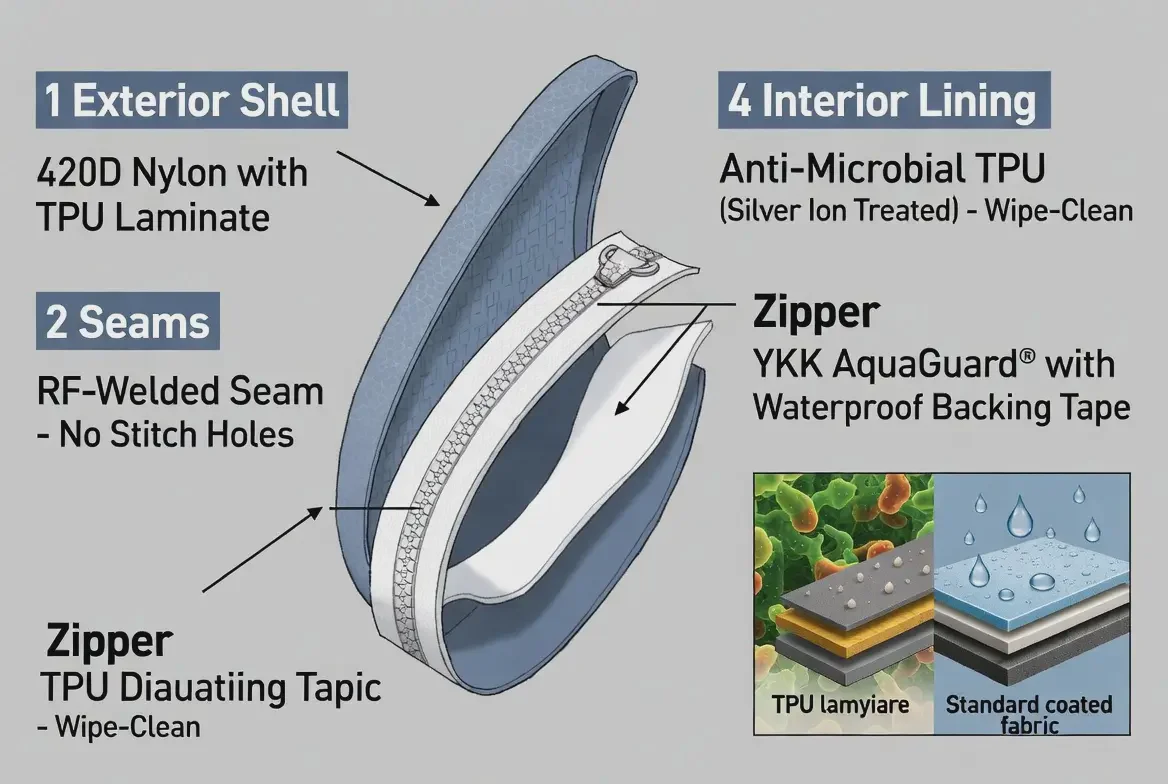
Inspect the seams first. If you see stitching, it is not fully waterproof—every needle hole is a potential leak point. Welded seams fuse the material layers into one solid piece. The zipper is the most common failure point. A standard coil zipper is a channel for water. A true waterproof zipper has a laminated waterproof backing behind the teeth. The interior lining is critical for mold prevention. A simple cloth lining will trap humidity and organic matter (flecks of makeup), creating a perfect breeding ground. A smooth, non-porous lining like TPU or silicone allows you to wipe away all moisture and residue. Look for technical terms: "IPX7" or "IPX8" rating (submersion protection), "welded construction," and "anti-microbial treatment." These are the hallmarks of a fortress, not just a pouch.
The Interior Ecosystem: How Do You Protect Different Products from Humidity and Heat?
A waterproof shell is useless if the environment inside becomes a sauna. The bag must actively manage the micro-climate for different product types, which have opposing needs: powders need dryness, some creams need to avoid freezing in AC, and brushes need to breathe.
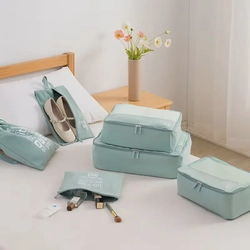
The ideal bag employs a "zoned defense" strategy. It uses hermetically sealed, removable pods for liquids and powders (with space for a desiccant packet), ventilated, moisture-wicking compartments for brushes and tools to prevent mildew, and insulating layers or phase-change materials in sections for heat-sensitive products. This compartmentalization prevents cross-contamination of humidity and allows targeted protection.
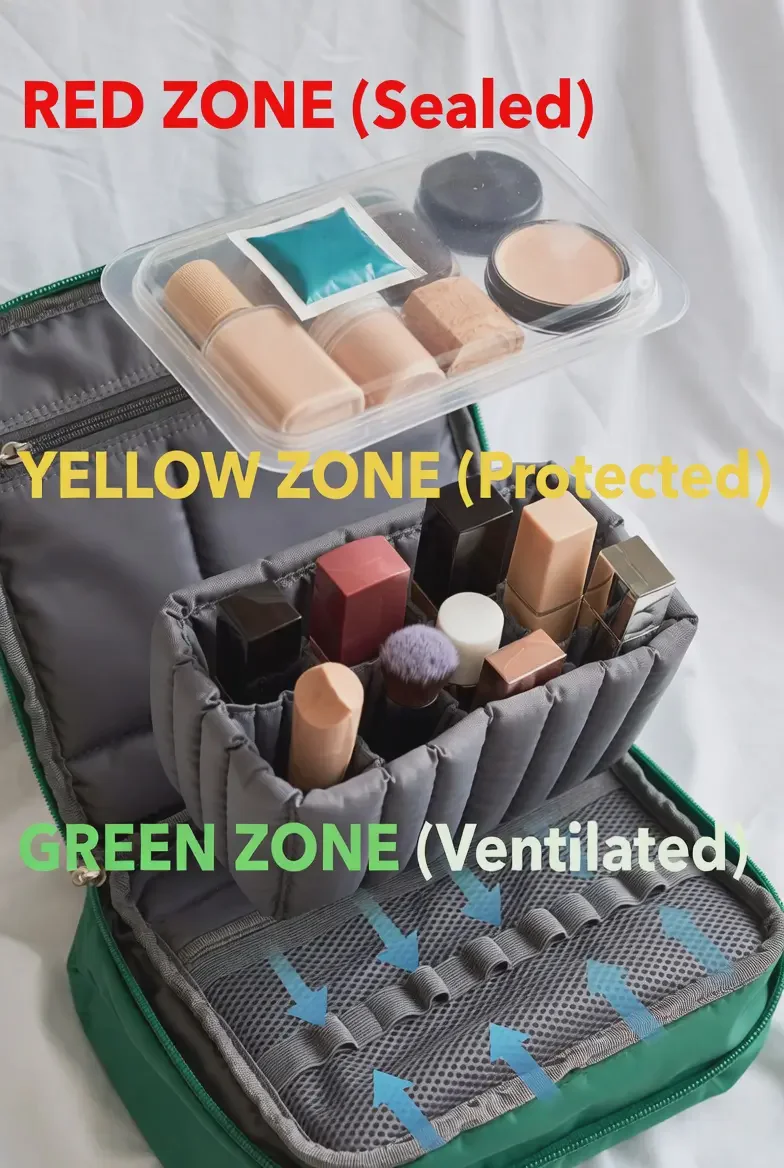
Implement this logic in your bag:
For Liquids & Powders (Highest Risk): Use airtight, screw-top containers within a removable, hard-sided pod inside the main bag. Always include a silica gel desiccant packet in this pod to scavenge any trapped moisture.
For Creams & Lipsticks (Heat-Sensitive): These can melt. Keep them in the most insulated part of the bag, away from direct sun. Some advanced bags use reflective linings (like those in food delivery bags) to deflect radiant heat.
For Brushes & Tools (Mildew Risk): Never pack them damp. Store them in a separate, ventilated compartment made of mesh or perforated material that allows airflow. Consider a travel-sized UV sanitizer for periodic treatment.
This zoned approach acknowledges that a one-size-fits-all interior will fail. Your bag's organization should be as strategic as its construction.
The Daily Protocol: How Do You Use and Maintain the Bag in Steamy Conditions?
Even the best equipment fails without proper doctrine. In Southeast Asia's climate, how you use and care for your makeup bag is as important as the bag itself. Negligence can compromise even perfect engineering.
Your daily routine must include active dehumidification, rigorous cleaning, and smart storage. This means never storing the bag sealed shut in a humid room, conducting weekly disinfectant wipe-downs of the interior, and strategically using desiccants. The bag is a tool, not a set-and-forget container; its performance depends on your stewardship.
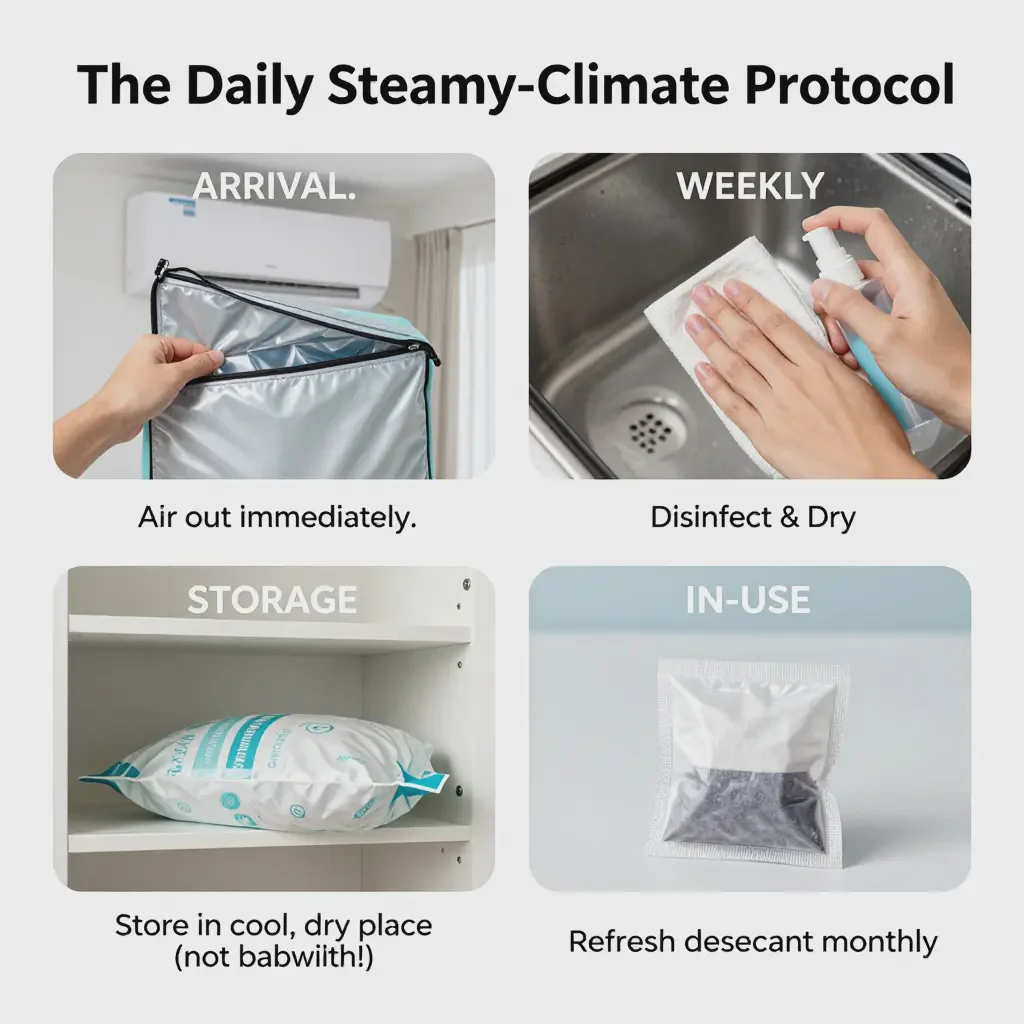
Adopt these non-negotiable habits:
Upon Entering Any Accommodation: Immediately open your makeup bag fully. If possible, place it near (not directly under) an air conditioning vent for 15-20 minutes to drive out accumulated ambient humidity from transit.
Weekly Maintenance: Empty the bag. Wipe the interior with a cloth dampened with a solution of 1 part white vinegar to 3 parts water or a few drops of tea tree oil in water—both are natural anti-fungals. Rinse with a water-dampened cloth and air dry completely before repacking.
Strategic Packing: Never pack products still warm from use. Let everything cool to room temperature. Use the "double containment" method for liquids: secure the cap, wrap the neck in plastic wrap, then place it in the bag's sealed compartment.
Desiccant Management: Use rechargeable silica gel packets. When the indicator beads turn pink, "recharge" them in a low-heat oven (as per instructions) to drive off the moisture they've absorbed.
This protocol transforms the bag from a passive container into an active climate-management system.
Conclusion
Conquering Southeast Asia's steamy climate with your beauty routine intact is not about finding a magic product, but about implementing a complete system. The unbeatable waterproof makeup bag is the cornerstone of this system—a piece of technical gear as essential as your passport.
By understanding the triple threat of humidity, rain, and heat, insisting on fortress-grade construction with welded seams and anti-microbial linings, implementing a zoned interior strategy for different product vulnerabilities, and adhering to a disciplined daily protocol of airing, cleaning, and desiccant use, you create an impenetrable micro-environment for your cosmetics. This approach empowers you to explore vibrant markets, trek through jungles, and lounge on pristine beaches without sacrificing your routine. In the end, the right bag doesn't just hold your makeup; it grants you the freedom and confidence to fully embrace the adventure, knowing your essentials are protected against the elements.