Say Goodbye to Plastic: Recycled Ocean Plastic Makeup Bags Are the 2026 Trend
For decades, the standard makeup bag has been an item of convenient, often disposably low-quality, plastic construction. Cheap vinyl, flimsy linings, and non-recyclable synthetics have dominated the market. However, by 2026, a profound shift in consumer consciousness and manufacturing capability has arrived: the definitive rise of the recycled ocean plastic makeup bag. This is no longer a niche choice; it is the trend, blending high-performance design with environmental responsibility. Consumers are demanding that their beauty storage reflect their values. This article explores why recycled ocean plastic is the new material benchmark for 2026, how it compares to the old plastic standard, and how to select a durable, stylish, and truly sustainable vanity case for your modern lifestyle.
The Problem: The Legacy of Virgin Plastic in Beauty
To understand the 2026 trend, we must acknowledge the sheer volume of virgin plastic historically consumed by the cosmetic storage industry. Traditional makeup bags, while often affordable, come at a significant environmental cost.
1. Fossil Fuel Reliance and Non-Biodegradability
Standard PVC (vinyl) and basic polyester require significant fossil fuel extraction to produce. These materials are incredibly durable, which is ironically the problem; they do not biodegrade, lingering in landfills for centuries.
2. The Microplastic Crisis
The beauty industry is a major contributor to microplastic pollution, not just through product formulations but also through its durable goods. When standard plastic bags eventually break down or are improperlly discarded, they fragment into microplastics, infiltrating ecosystems and ultimately the food chain. The move toward removing existing plastic from the ocean to create new products is a proactive step that resonates deeply with 2026 consumers.
2026 Trend: The Dawn of Upcycled Ocean Plastic
The shift toward recycled ocean plastic is a classic case of innovation meeting demand. By 2026, the technology to collect, clean, and reprocess marine plastic debris into high-quality, durable fibers has matured. This isn't just about reusing any plastic; it’s specifically about remediating the most critical environment—our oceans.
Performance Without Compromise
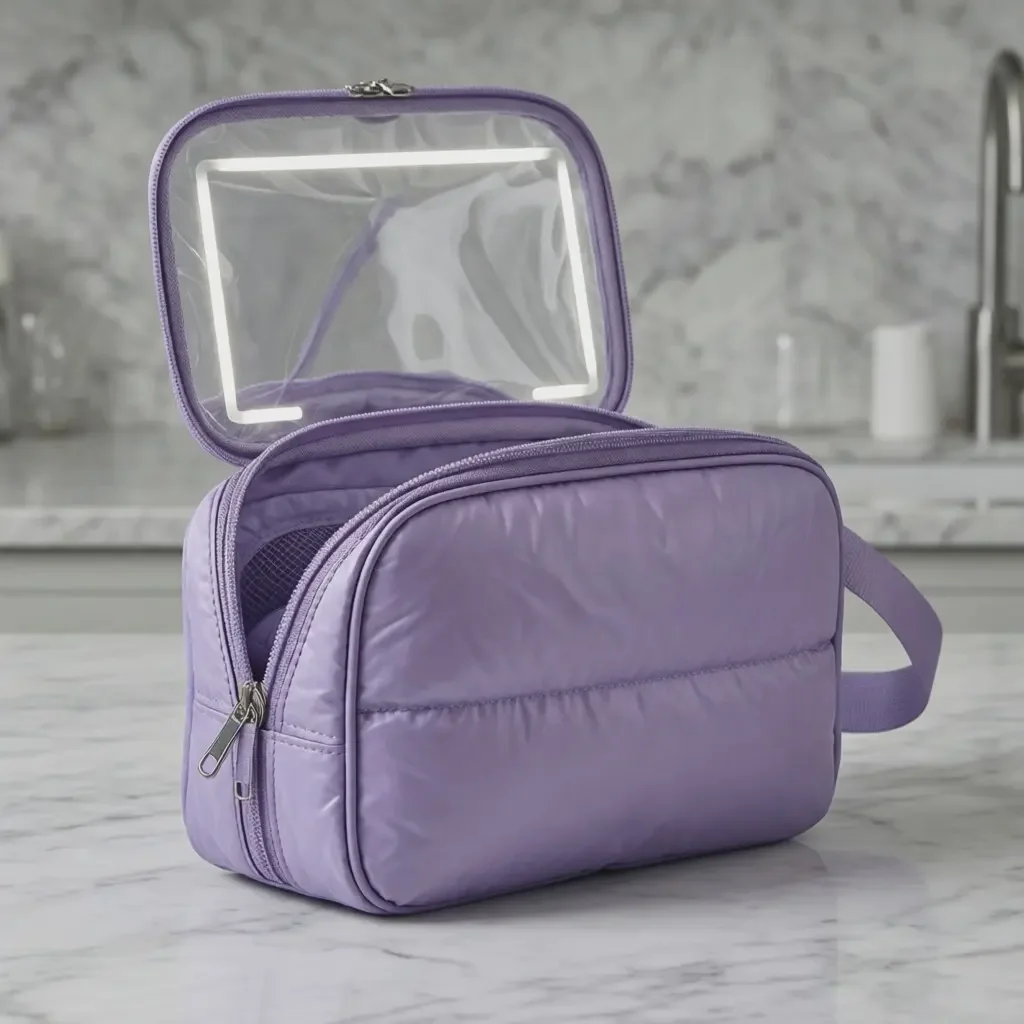
Crucially, the 2026 recycled material is not a compromise on performance or style. Manufacturers have learned to create luxurious textures, advanced durability, and high functionality from these reclaimed materials. For example, the sophisticated soft "puffer" texture seen on the lavender 2026-style bag in our main visualization below is crafted entirely from certified ocean-bound plastic. It is rugged, water-resistant, and aesthetically pleasing, competing directly with luxury synthetics.
Comparison: Recycled Ocean Plastic vs. Traditional Plastic Bags
The superiority of the 2026 recycled ocean plastic bag is evident across all critical domains.
| Feature | Pre-2026 Traditional Plastic Pouch | 2026 Recycled Ocean Plastic Case | Environmental & User Impact |
| Material Source | Virgin Fossil Fuels (PVC/Polyester) | Upcycled Marine Debris (PET/Nylon) | Drastic reduction in carbon footprint. |
| Environmental Role | Contributor to Pollution | Remediation of Existing Pollution | Helps clean the oceans actively. |
| Durability | Variable (often cheap/brittle) | High-Performance (engineered fibers) | Long-lasting investment, reducing waste. |
| Hygiene/Cleaning | Basic Wipe-Down /Reactive | Modular/Antimicrobial & Machine Washable | Superior sanitation (refer to Modular Detail). |
| Integrated Tech | Rare/None | Often (LED, Wireless Charging) | Unified, untethered beauty setup (Tech Trend). |
| End of Life | Landfill (Hard to recycle) | Fully Recyclable (Circular Design) | Supports a circular economy. |
Buying Guide: Selecting a Genuine Sustainable Vanity
With sustainable claims becoming ubiquitous, discerning the truly impactful options is essential for the eco-conscious traveler in 2026. Use this guide to make an informed choice:
1. Verify Third-Party Certifications
Do not rely solely on a brand's "made from recycled ocean plastic" statement. Demand transparency. Genuine sustainable products in 2026 display verified certifications on their labels. Look for labels like Global Recycled Standard (GRS), Repreve® (a certified high-quality recycled fiber), or Ocean Bound Plastic (OBP) Certification. These certifications validate the percentage of recycled content and trace the material’s chain of custody.
2. Prioritize Modular Design for Hygiene
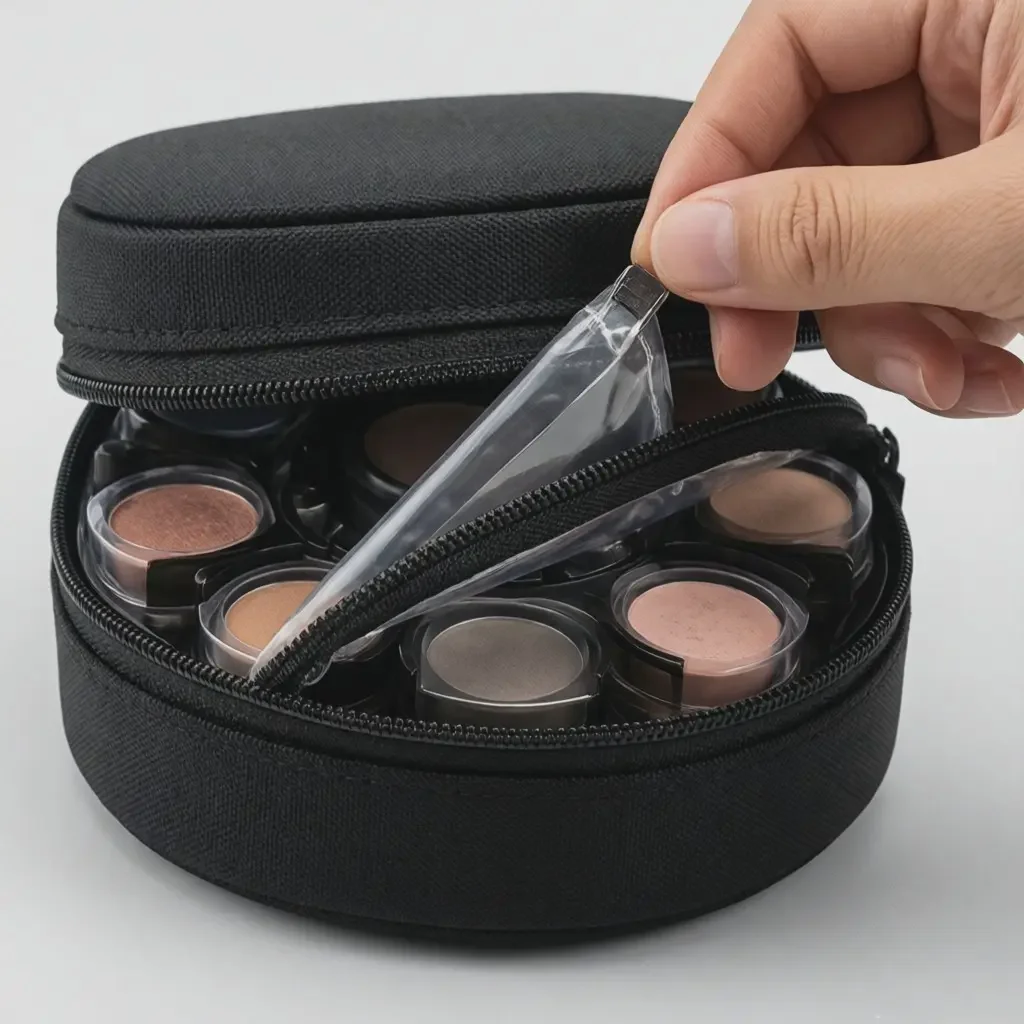
Modularity is a core tenet of circular design. A sustainable bag must be cleanable and repairable to extend its life. In my previous analyses, I highlighted the importance of modularity for cleanliness. In 2026, this feature is essential. Look for a bag where the structural shell is separate from a removable, cleanable inner liner.
As visualized in this close-up, a hand is detaching the transparent, durable inner module. This modularity means that if a foundation leaks (refer to the Cleanliness Trend), you don't throw away the whole bag; you simply detach the internal liner, sanitize it (refer to image detail), and click it back in. This drastically reduces the consumption of new products over time.
3. Seek Integrated Performance Features
Sustainable design in 2026 is smart design. As detailed in the 'Tech Integration' discussion, many eco-bags now feature high-quality integrated LED mirrors and sometimes even wireless charging hubs (see visual integration). Investing in a versatile bag that combines lighting, charging, and storage allows you to own fewer single-use devices, reinforcing your sustainable lifestyle choice. The lifestyle visualization below shows a traveler effortlessly utilizing the self-contained vanity station in a chic airport lounge.

4. Evaluate Circularity (Recyclability at End of Life)
A truly sustainable product isn’t just made from recycled materials; it is designed to be recycled again. Check the manufacturer's end-of-life policy. High-performance recycled plastic fibers are often fully recyclable. Some 2026 brands even offer take-back programs to ensure the materials enter a circular recycling stream.
High-Quality Dofollow Links:
Ellen MacArthur Foundation: Circular Economy Introduction: Definitive authority on designing out waste.
Visit Ellen MacArthur Foundation
Frequently Asked Questions (FAQ)
Q: Are recycled ocean plastic bags as durable as regular plastic bags?
A: Yes, often even more durable. In 2026, the technology for reprocessing reclaimed marine plastics (such as PET and Nylon) has advanced, enabling the creation of high-performance engineered fibers. These materials, such as the soft "puffer" texture shown, are robust, water-resistant, and designed for longevity.
Q: Is the integrated LED mirror also sustainable?
A: The lighting system’s sustainability relies on energy efficiency (LED) and the power source. High-end eco-bags typically use efficient LED technology (like the glowing border visualized) and a high-capacity rechargeable battery (often removable, as detailed in our tech integration discussion) to minimize waste. Always select a bag with a removable electronic module for circularity.
Q: How do I know the plastic was actually taken from the ocean?
A: Look for verifiable third-party certifications like the Global Recycled Standard (GRS) or Ocean Bound Plastic (OBP) Certification. Genuine brands display these, tracing the material from ocean collection to finished product, ensuring transparency and preventing 'greenwashing'.