How to Deal with Spilled Makeup in Checked Baggage Suspecting TSA Involvement
Introduction
Travelers often search for ways to pack cosmetics securely, but a key gap in search engine results pages (SERPs) lies in addressing suspicions of TSA involvement in spills. While general packing tips abound, few resources detail the procedural steps for investigation, claims, and prevention when inspections lead to damage. This oversight is critical because unchecked spills can ruin clothing, electronics, and other items, escalating costs and frustration. Filling this gap ensures users gain practical, evidence-based guidance to protect their belongings and assert their rights during air travel.
Basic Concepts
TSA regulations classify makeup items like foundations, mascaras, and serums as liquids, gels, or aerosols. For checked baggage, there are no volume restrictions, unlike carry-ons where items must fit in a quart-sized bag with each container under 3.4 ounces (100 ml). However, TSA may inspect checked luggage for security, potentially opening containers to test contents. Spills occur if lids are not resealed properly or if pressure changes during flight cause leaks. Understanding these basics helps differentiate between accidental damage from handling and potential mishandling during inspections, empowering travelers to assess incidents objectively.
Technical Principles
The process of dealing with a spill involves immediate containment, documentation, and resolution. Below is a textual flowchart outlining the sequence:
- Discovery of Spill → Assess damage: Identify affected items and note any TSA inspection notice inside the bag.
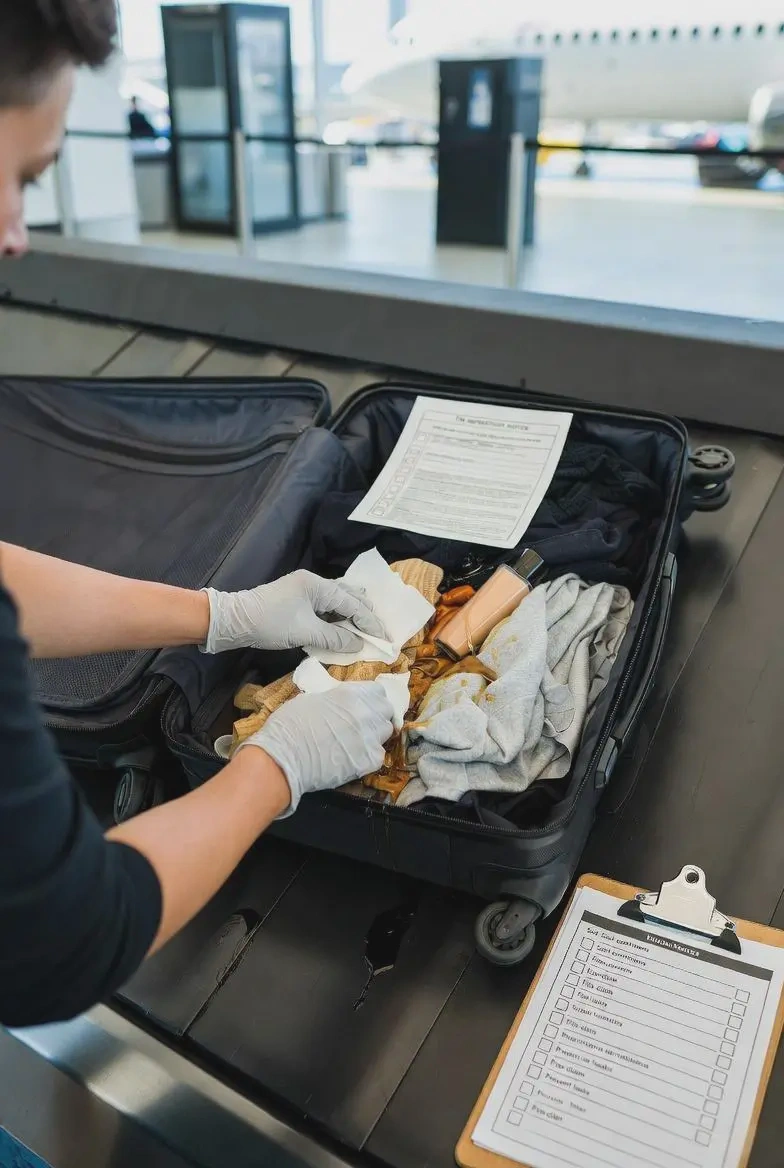
- Containment → Isolate spilled makeup: Use absorbent materials like paper towels to blot excess, then seal contaminated items in plastic bags to prevent further spread.
- Cleaning → Remove residue: For fabrics, apply stain removers; for hard surfaces, use mild soap. Test small areas first to avoid worsening damage.
- Documentation → Photograph evidence: Capture the spill, open containers, and any TSA slip before cleanup.
- Investigation → Check for TSA role: If a notice is present and containers appear tampered with (e.g., lids loose), proceed to claims.
- Resolution → File claim: Contact TSA via online form, phone (866-289-9673), or Twitter for reimbursement if negligence is suspected.
- Prevention for Future → Adjust packing: Wrap items individually and use reinforced bags.
This structured approach minimizes secondary damage and builds a case for accountability.
Comparison Table
| Aspect | Carry-On Baggage Strategy | Checked Baggage Strategy |
|---|---|---|
| Volume Limits | Restricted to 3.4 oz per item in quart bag | No limits, but risk of spills higher |
| Spill Risk | Low, as items remain with traveler | Higher due to rough handling and inspections |
| TSA Interaction | Visible screening at checkpoint | Behind-the-scenes checks, possible opening |
| Prevention Methods | Clear bag for easy access | Double-bagging, central placement in suitcase |
| Pros | Direct control, quick access | More space for larger items |
| Cons | Limited quantity | Potential for unseen damage |
This table highlights trade-offs to inform packing decisions based on trip needs.
Checklist for Prevention and Response
- Verify all makeup containers are tightly sealed before packing.
- Wrap liquid items in individual plastic bags or use leak-proof pouches.
- Position makeup bag in the suitcase's center, surrounded by soft clothing for cushioning.
- Include absorbent pads or cloths in your travel kit for quick cleanup.
- Upon arrival, inspect luggage immediately for TSA notices or spills.
- Document any issues with photos, including timestamps and locations.
- Retain receipts for affected items to support claims.
- Review airline and TSA policies pre-flight for updates on liquids.
Case Studies
In one reported incident from a traveler flying through a regional airport, skincare products in original screw-top containers were packed in water-resistant bags. Upon arrival, green serum had spilled outside the bag, suggesting containers were opened and not resealed during inspection, as evidenced by a TSA notice. The user estimated losses at several hundred dollars and shifted to carry-on for future trips.
Another case involved a checked bag where mascaras and lip glosses were left uncapped after inspection, causing gooey residue to cover clothing and ruin multiple items. The traveler noted the makeup bag was left open, leading to widespread contamination. This prompted a switch to carry-on packing to maintain control over valuables.
A third example described a suitcase with cosmetics in secure packaging, but post-inspection spills occurred from loosely replaced lids, affecting adjacent items like electronics. The individual filed a TSA claim, highlighting the need for better resealing protocols.
These real-world examples underscore the importance of vigilant packing and prompt reporting.
Advanced Analysis
To address SERP gaps, consider legal and insurance angles often overlooked. Travelers have rights under TSA guidelines to file claims for proven negligence, but success rates vary—documentation is key, as vague complaints rarely yield reimbursements. Integrate travel insurance that covers baggage damage, which can supplement TSA processes. For high-value makeup, opt for tracked shipping alternatives on long trips. Analyze pressure dynamics: Cabin depressurization can exacerbate leaks, so advanced prevention includes vacuum-sealing or using pressure-resistant containers. Finally, monitor TSA's evolving tech, like CT scanners, which may reduce physical openings but aren't universal yet. These insights provide deeper strategies beyond basic tips.
Conclusion
Handling spilled makeup in checked baggage, especially with suspected TSA involvement, requires a methodical approach from prevention to claims. By understanding regulations, documenting incidents, and applying structured strategies, travelers can mitigate risks and recover losses effectively. Prioritize carry-on for fragile items where feasible, and stay informed on policies to enhance future experiences.