How to Master Your Travel Makeup Bag and Survive Turbulent Flights Without a Spill?
How to Master Your Travel Makeup Bag and Survive Turbulent Flights Without a Spill?
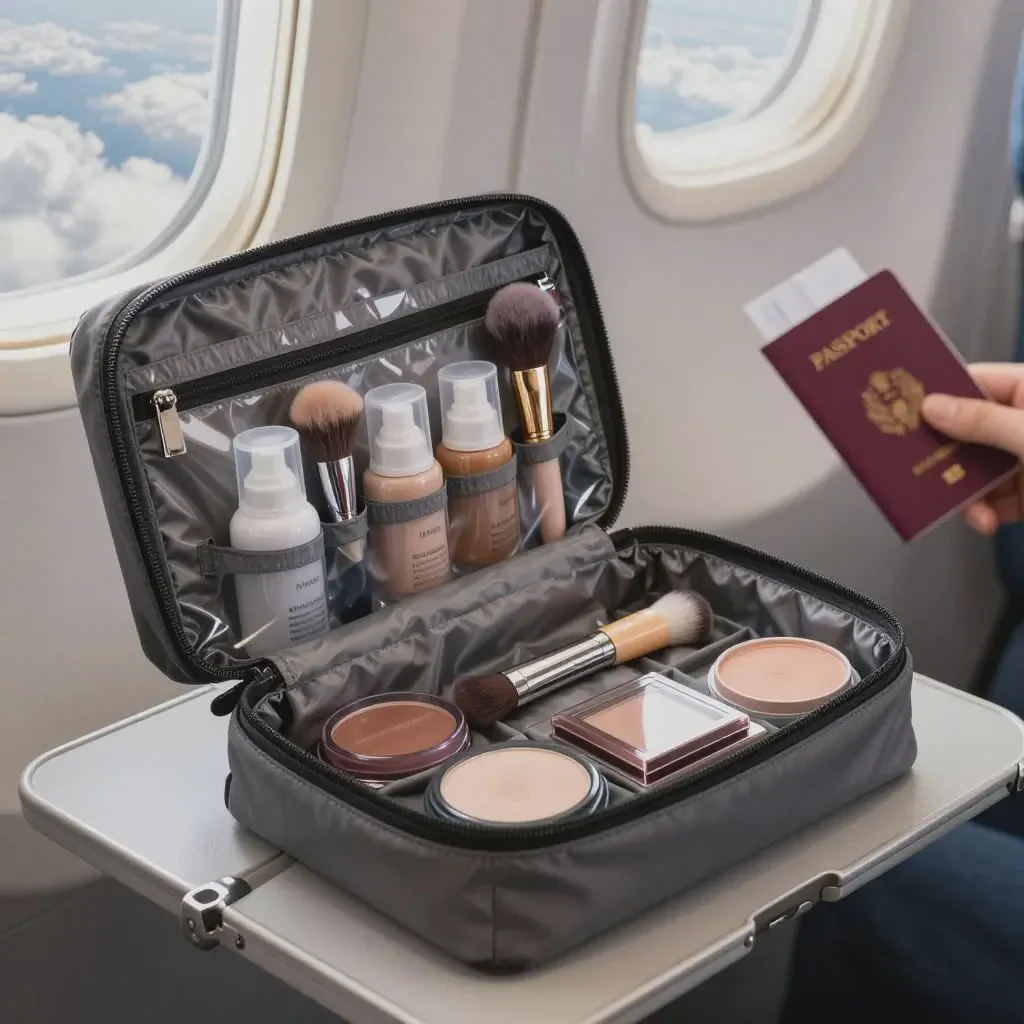
There's a special kind of travel dread that has nothing to do with delays or lost luggage. It's the fear of opening your carefully packed carry-on to find a sticky, colorful disaster where your makeup bag used to be. Cabin pressure changes and turbulence are the sworn enemies of even the most tightly sealed serum bottle. But what if your travel beauty kit could emerge from a transatlantic flight as pristine as when it boarded? This guide transforms you from a hopeful packer into a strategic traveler, equipping you with the physics-backed hacks, TSA-smart strategies, and gear recommendations to ensure your makeup bag arrives—and survives the journey—like a pro.
A spill-proof flight starts with understanding cabin pressure physics, implementing a multi-layered sealing strategy, mastering TSA's 3-1-1 rule with smart packing, and choosing the right bag with internal organization to keep everything secure and accessible.
Achieving this level of travel-ready resilience requires action on four key fronts: winning the battle against physics, playing by the rules at security, organizing for in-flight ease, and selecting gear engineered for the job. Let's break down each step.
The Physics of a Spill: Why Do Bottles Leak and How Do You Stop It?
Before you pack a single item, you need to understand the invisible force working against you: pressure change. As your plane climbs, the cabin air pressure decreases, but the air trapped inside your sealed toiletry bottles remains at ground-level pressure. This pressure differential is what forces liquids out through the slightest gap in a seal.
Combat cabin pressure with the "Pressurize, Seal, and Isolate" method: remove air from bottles, add a secondary seal at the cap, and contain all liquids in a single, heavy-duty zip-top bag.
An illustrated diagram showing a cross-section of a plane cabin. One arrow points up from a city labeled "High Pressure (Ground)." Another arrow points down toward clouds labeled "Lower Pressure (Cabin)." A small icon of a bottle with expanding air inside shows a droplet being pushed out of the cap. Callouts explain the science simply.
Step 1: Pressurize in Your Favor (The Squeeze). For soft plastic bottles (like shampoo), squeeze out all excess air until the liquid reaches the very top, then screw the cap on tightly. This minimizes the air pocket that can expand.
Step 2: Create a Secondary Seal (The Barrier). Once the cap is on, place a small square of plastic wrap or a specialized bottle sealing disc over the mouth before screwing the cap down completely. For an even stronger seal, put a small piece of tape over the seam of the cap.
Step 3: Isolate the Threat (The Quarantine). No sealing method is 100% infallible at 35,000 feet. Therefore, place every single liquid, cream, and gel item into a sturdy, gallon-sized zip-top freezer bag. This is your ultimate containment unit. If something leaks, the mess is confined.
The TSA Game: How Do You Pack a Compliant and Leak-Proof "Liquids Bag"?
Your battle with physics must also comply with security regulations. The TSA's 3-1-1 rule is non-negotiable, but within its constraints, you can pack a remarkably efficient and secure beauty arsenal.
Maximize your 1-quart bag by choosing soft, squeezable containers, using multi-purpose products, and packing with a strategic layout that prevents caps from popping open under pressure.
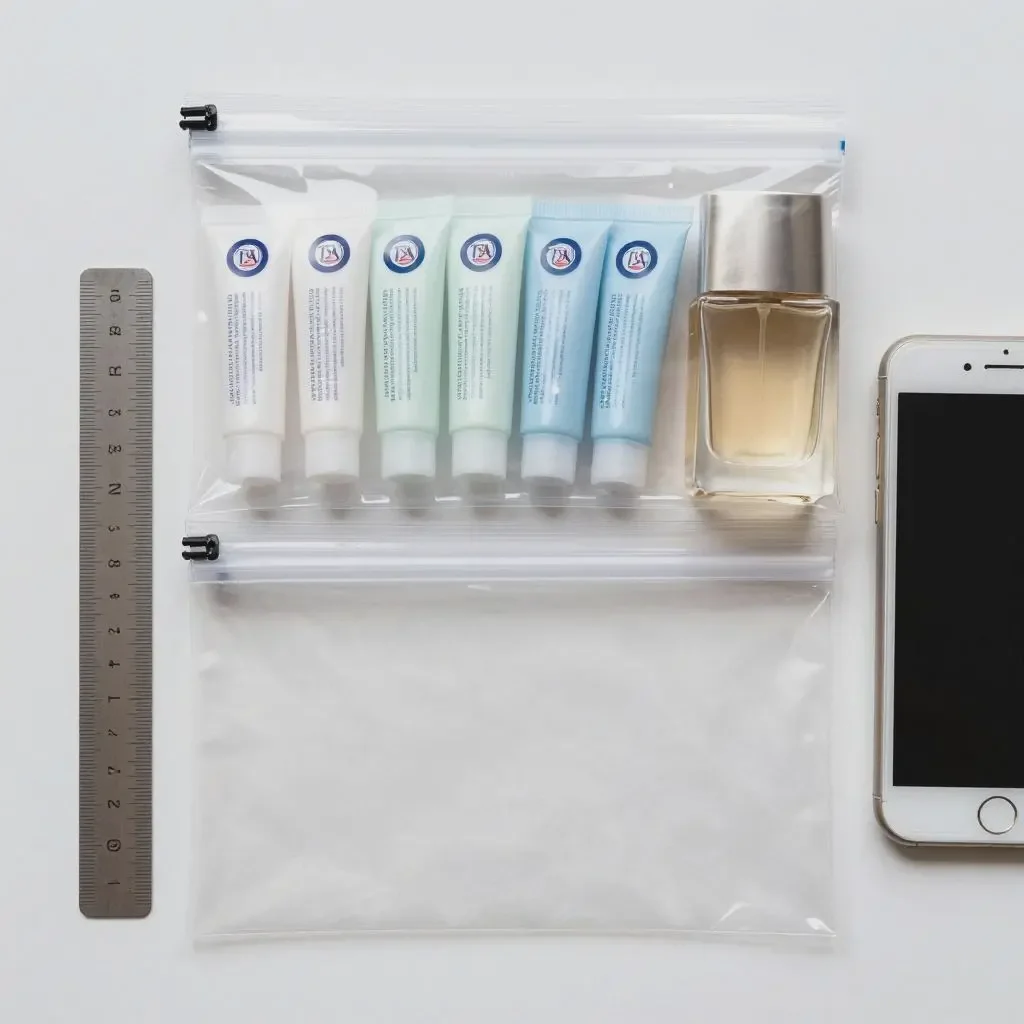
Container Intelligence: Ditch hard, bulky mini bottles. Opt for soft silicone travel tubes that you can squeeze air out of completely. For the foundation, use flat, pod-style containers. These conform to space better and are less prone to pressure-related issues.
Product Strategy: Every item should serve multiple purposes. A tinted moisturizer with SPF is a primer, foundation, and sunscreen. A cream blush can double as eyeshadow. This reduces the number of liquid items you need.
Packing Layout: Place the bag flat in your carry-on. Pack items upright with caps pointing up. Place heavier, more stable items (like solid products) around the perimeter to cushion the more vulnerable tubes and bottles in the center. Consider placing a folded paper towel at the bottom of the quart bag to absorb any minute moisture.
In-Flight Organization: How Do You Keep Everything Accessible and Secure?
A bag that survives the flight is only half the victory. The other half is being able to freshen up or do a quick makeup routine in a cramped airplane bathroom without causing a landslide of products.
Organize your bag internally with dedicated zones for different product types and use small pouches or elastic loops to keep items from shifting during turbulence.
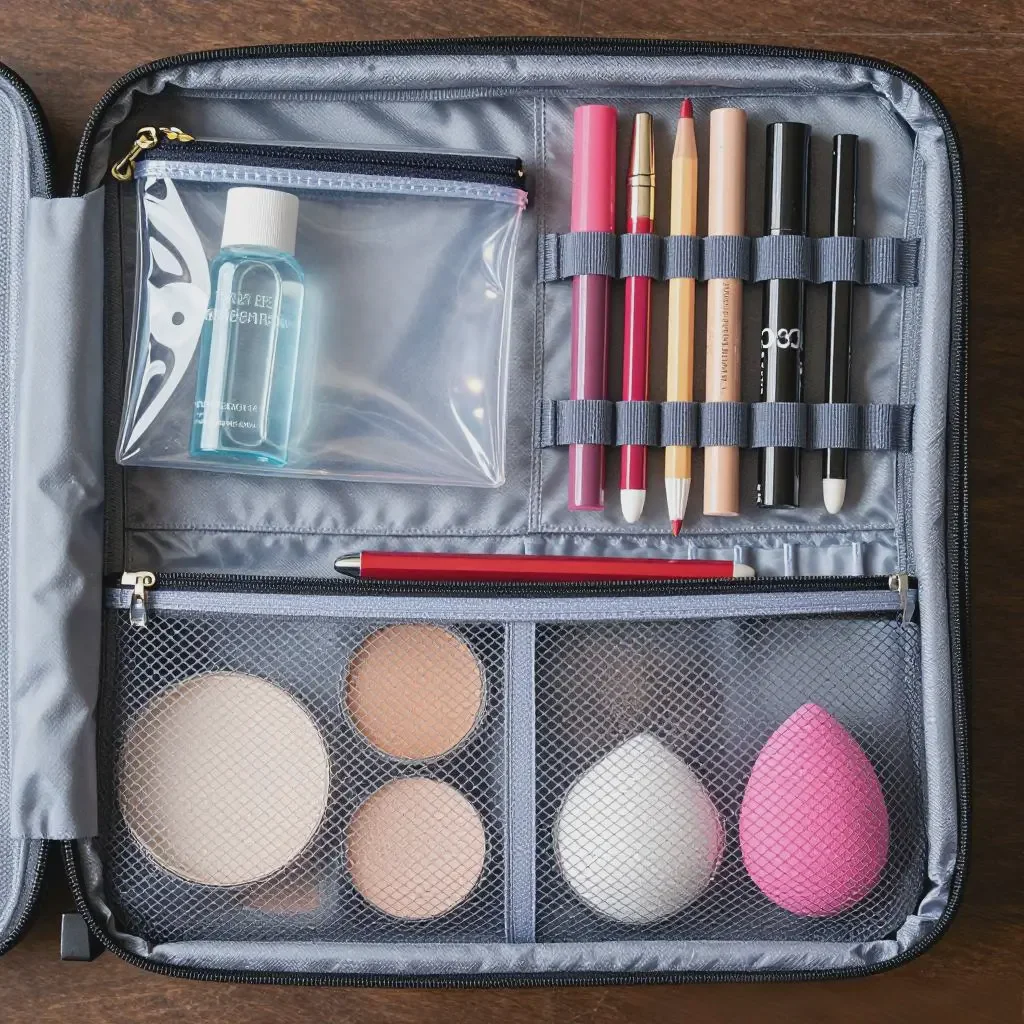
Zone Defense: Designate specific areas of your bag. For example: one mesh pocket for all eye products (mascara, liner, shadow sticks), one elastic loop section for brushes and pencils, and a flat bottom compartment for palettes. Your pre-packed TSA liquids bag becomes its own removable zone.
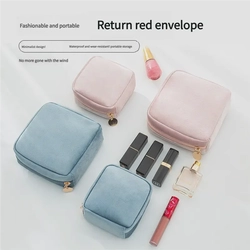
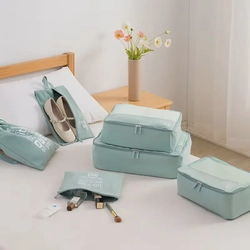
Containment within Containment: Use very small zip-top bags or silky pouches inside your main bag. Group "in-flight touch-up essentials" (lip balm, powder, concealer, a mini moisturizer) in one tiny pouch you can grab and take to your seat.
The Power of Compression: If your bag has a zip-around opening that flattens completely, use it. Pack it so that when zipped, the contents are gently compressed and cannot move around. This is far superior to a loose, open-top bag where everything tumbles.
The Right Tool for the Job: What Makes the Perfect Travel Makeup Bag?
Your strategy is only as good as the tool that executes it. The right bag isn't just about aesthetics; it's a piece of engineering that addresses all the challenges of travel.
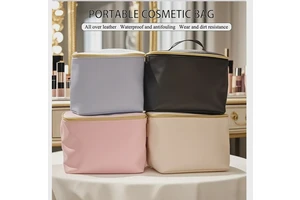
The ideal travel makeup bag has a water-resistant lining, a structured or semi-structured shape, intelligent internal organizers (loops, mesh, removable pods), and a TSA-friendly clear compartment.
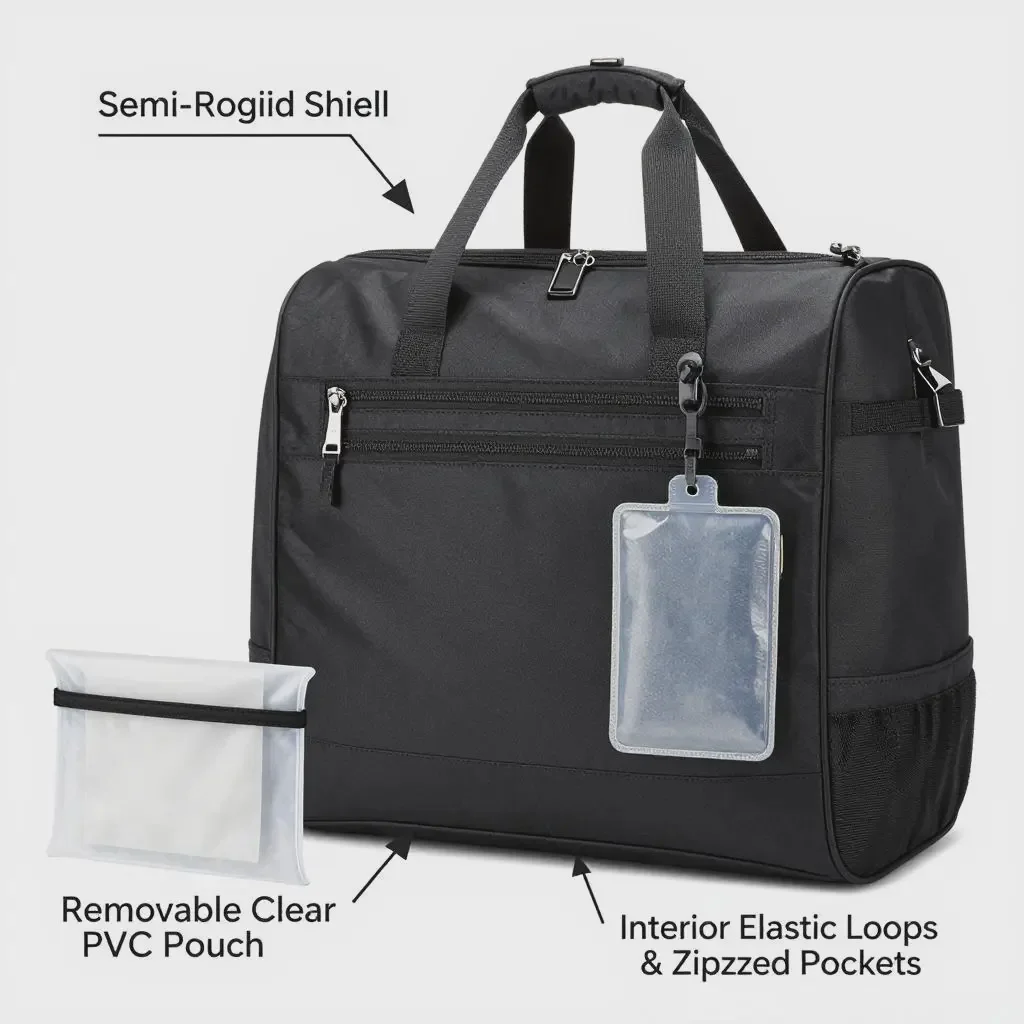
Material & Build: Look for bags with TPU or PVC-lined interiors that can be wiped clean if a leak occurs. The bag should have some structure—either a hard shell or thick, padded sides—to protect contents from being crushed in your overhead bin.
Internal Design is Key: Prioritize bags with built-in elastic bands to hold tubes and brushes vertically, zippered mesh pockets to separate powders from creams, and perhaps a detachable mirror. A removable, clear zip pouch is a game-changer, acting as your pre-packed TSA kit.
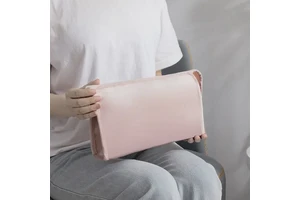
Form Factor: Consider a flat, clutch-style bag that opens like a book and lies flat. This gives you a stable "workstation" on a tiny bathroom counter and makes every item immediately visible. A hook can also be invaluable for hanging the bag on a door.
Conclusion
Mastering your travel makeup bag is a satisfying fusion of science, strategy, and smart consumerism. It's about respecting the physics of flight with proactive sealing, playing the TSA game with clever container choices, maintaining order through thoughtful organization, and investing in a bag designed as a tool, not just an accessory.
When you implement these steps, you replace travel anxiety with confidence. You'll no longer dread the moment you unzip your bag. Instead, you'll have a reliable, self-contained beauty station that withstands the rigors of travel, keeps you feeling polished from takeoff to landing, and proves that with the right approach, you can indeed have your (leak-proof) skincare and wear it too, anywhere in the world.