The Ultimate Durability Duel: Is Luxe Leather or Tough Nylon Better for Your Portable Makeup Bag?
The Ultimate Durability Duel: Is Luxe Leather or Tough Nylon Better for Your Portable Makeup Bag?
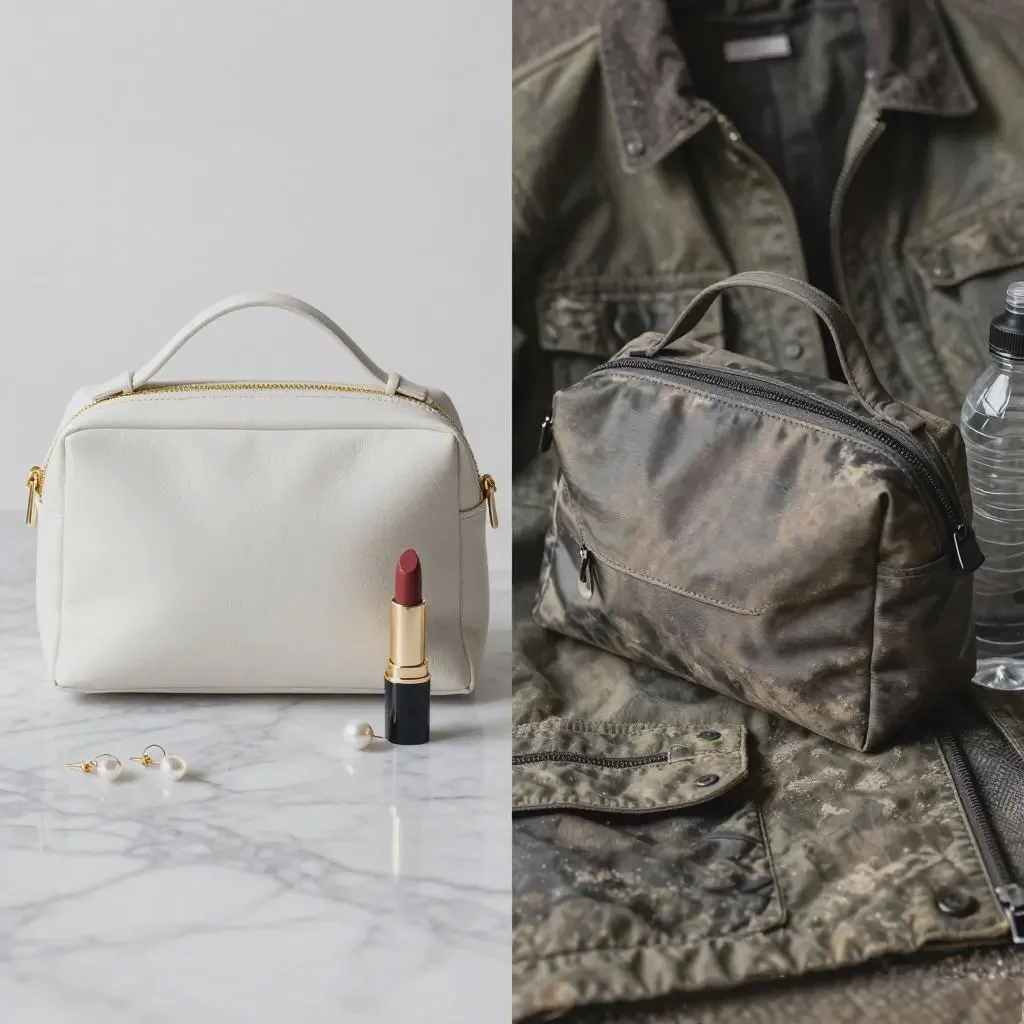
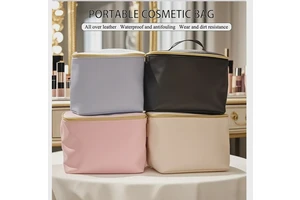
Choosing a portable makeup bag often feels like choosing a travel companion for your beauty essentials. Do you opt for the timeless, sophisticated appeal of leather, or the resilient, ready-for-anything practicality of nylon? Both promise durability, but their definitions—and the journeys they can withstand—are worlds apart. This isn't just an aesthetic choice; it's a strategic decision that impacts how your bag ages, survives accidents, and fits into your lifestyle. We dissect the hard facts of leather versus nylon to help you invest in the material that truly matches your daily grind.
Leather offers unmatched character development and long-term prestige but requires mindful care. Nylon delivers superior lightweight resilience, easy cleaning, and near-zero maintenance, making it a workhorse for active lives. The "better" material depends entirely on your definition of durability.
To move beyond generalizations, we need to examine durability through four critical lenses: resistance to physical damage, performance in the face of liquid disasters, long-term aging and care, and the practical realities of weight and ethics. Let's break down the duel.
Battle 1: Scratches & Scuffs – Which Material Hides (or Honors) the Marks?
The first test of durability is how a material endures the inevitable bumps and scrapes of daily life. Leather and nylon don't just resist damage differently; they tell a completely different story with every mark they receive.
Nylon excels at resisting and camouflaging surface abrasions from keys or zippers. Leather is more susceptible to visible scratches but often incorporates them into a evolving patina, treating damage as part of its narrative.
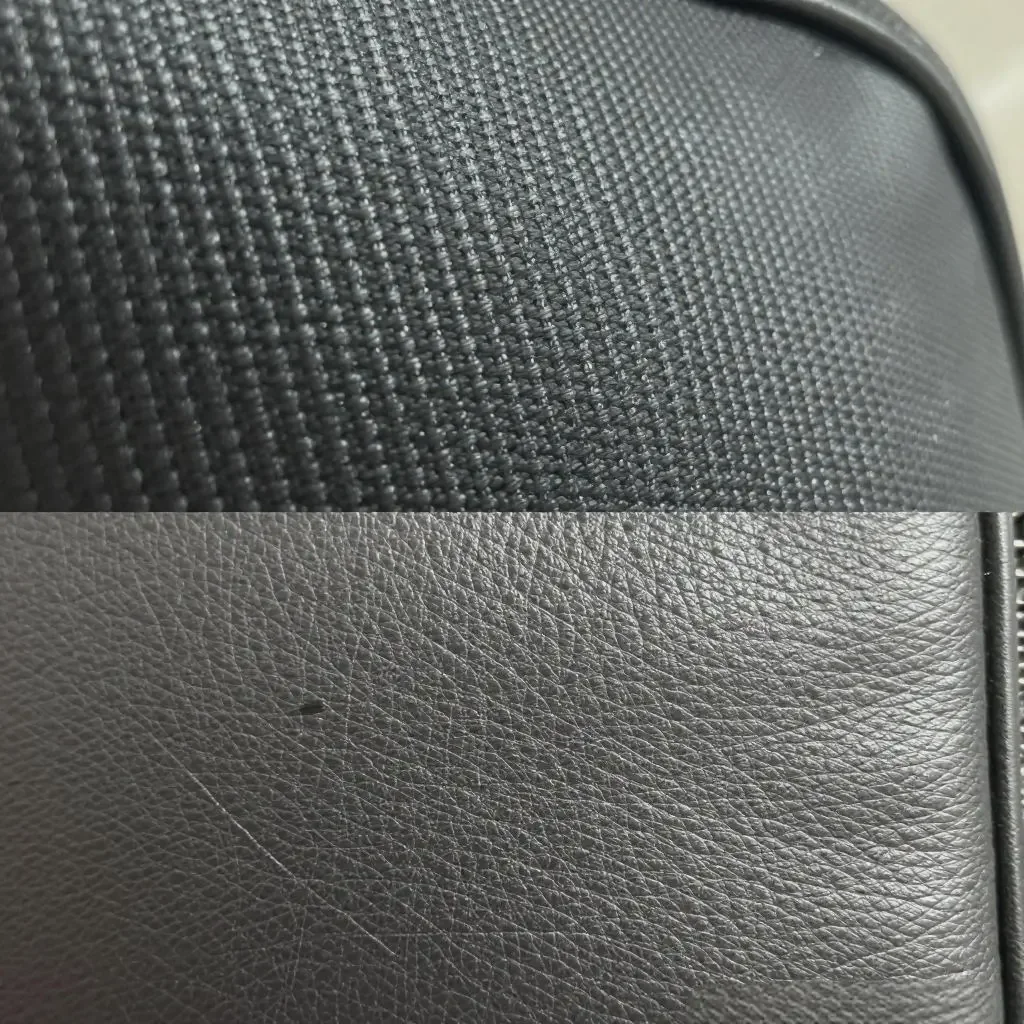
Nylon's Defense: High-quality, high-denier nylon (like Cordura) has a tightly woven, textured surface. Most minor scrapes glance off or appear as superficial surface marks that blend into the fabric's inherent texture. It's a master of damage diffusion.
Leather's Philosophy: Full-grain leather, especially vegetable-tanned varieties, is "alive." A scratch doesn't just sit on the surface; it becomes part of the material. Over time and with handling, these individual marks soften and blend into a richer, darker, unique patina. For enthusiasts, this "character development" is the point. However, a deep gouge or cut is more permanent and damaging to leather than to nylon.
Battle 2: The Spill Test – Can Your Bag Survive a Makeup Meltdown?
A true durability crisis occurs when the foundation leaks or toner spills. Here, the battle shifts from abrasion to absorption and cleanup—a clear-cut scenario where material science dictates the winner.
Nylon provides a formidable, non-porous barrier with easy-wipe cleanup—leather acts like a sponge, requiring immediate, specialized intervention to prevent permanent staining.
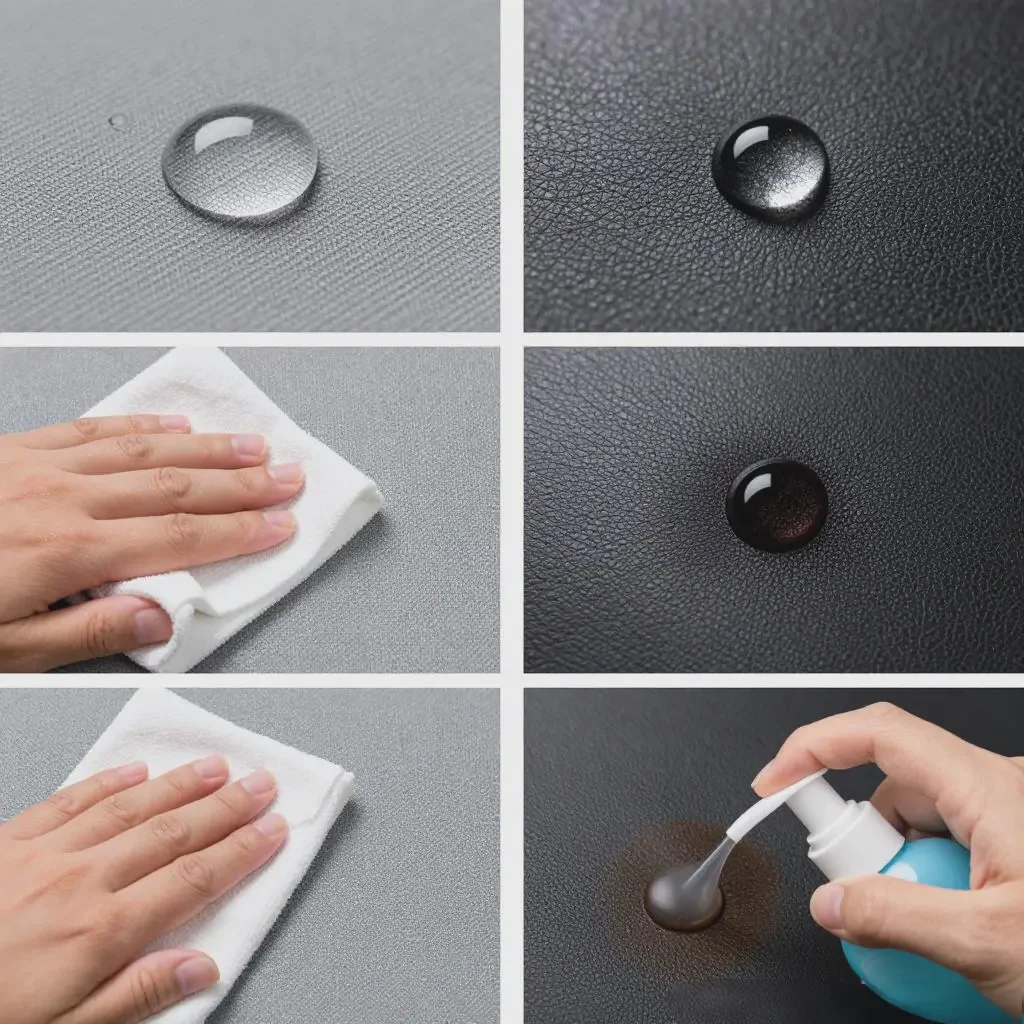
This is arguably nylon's most decisive victory for practical, everyday use.
Nylon's Liquid Protocol: Most travel-grade nylon features a Durable Water Repellent (DWR) coating. Liquids bead up and can be wiped away in seconds. Even if the coating wears, the synthetic fibers themselves do not absorb water-based liquids, giving you a critical window for cleanup. Isopropyl alcohol (common in makeup) also has minimal effect.
Leather's High-Stakes Scenario: Leather is hygroscopic—it absorbs moisture from the air and liquids on contact. An oil-based product (like foundation or makeup remover) can be catastrophic, sinking in and leaving a permanent dark stain. Immediate action with a specialized leather cleaner is mandatory. Nylon is the clear choice for anyone who lives with leak-prone bottles, frequent travel, or a less-than-perfect track record with spills.
Battle 3: The Long Game – How Do They Age and What Care Do They Demand?
Durability isn't just about surviving the first year; it's about how the bag looks and functions over a decade. Leather and nylon age on divergent paths, one curated and the other largely hands-off.
Leather aging is a curated, care-intensive process that can yield a prized heirloom. Nylon aging is a minimal, care-extensive process focused on functional longevity with little aesthetic change.
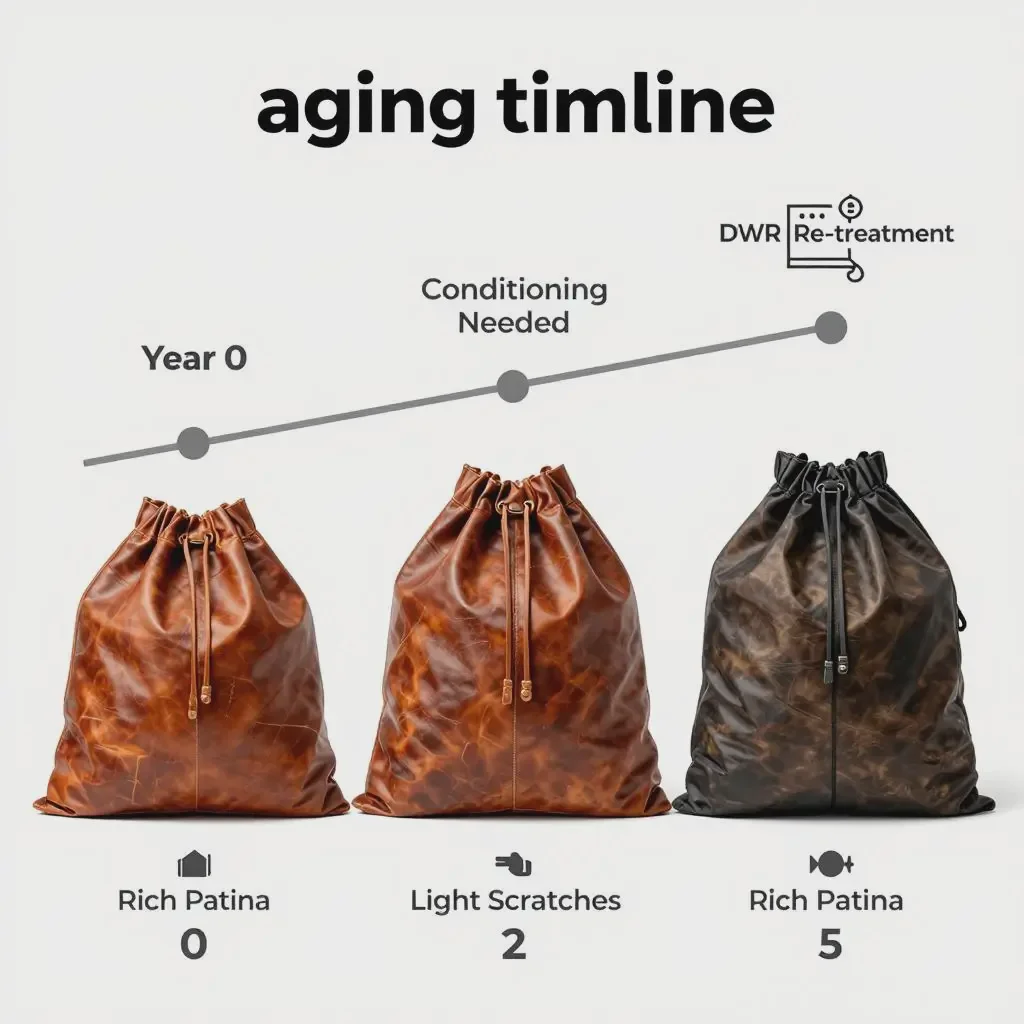
The Leather Journey: With bi-annual conditioning, high-quality leather can last decades, becoming softer and more personal. Neglect it—expose it to sun, heat, or let it dry out—and it will crack, stiffen, and fail. The stitching at stress points is also a potential long-term failure point. You are the custodian of its lifespan.
The Nylon Path: High-performance nylon is engineered to resist UV degradation and physical breakdown. Its aging is functional: the DWR coating may diminish (often re-treatable), and high-wear areas may "pill" or develop a sheen. However, its core strength and color remain intact with virtually no maintenance beyond cleaning. It won't develop a patina, but it also won't demand one.
Battle 4: Weight & Conscience – What's the Practical and Ethical Load?
Finally, durability extends beyond the bag itself to its impact on your carry and your values. The weight on your shoulder and the weight of its production are part of the total cost of ownership.
Nylon offers a significant weight advantage and growing options in recycled materials. Leather provides substantial heft and the complexity of a natural, biodegradable material with an involved supply chain.
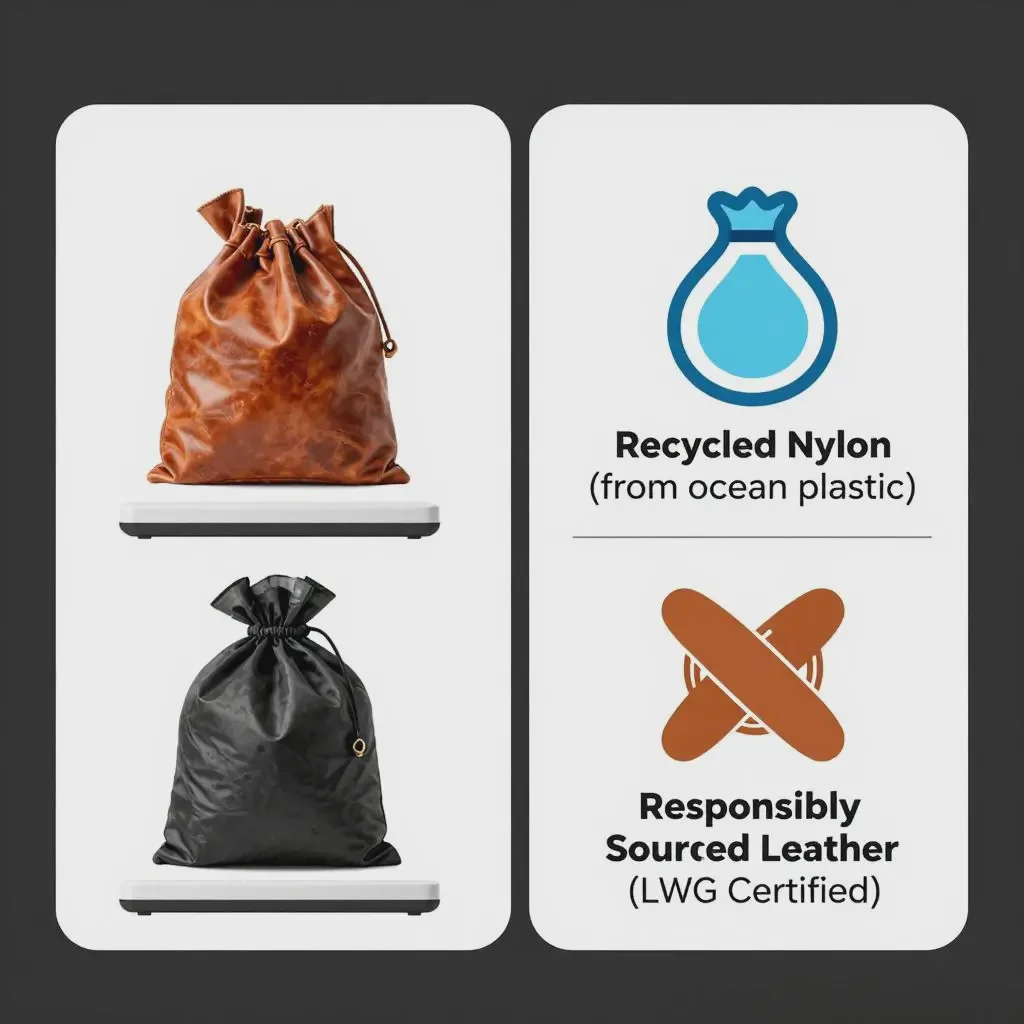
The Weight Factor: For the same size and structure, a nylon bag can be less than half the weight of a leather equivalent. This is a major factor for travel, gym bags, or minimalist daily carry. Leather's weight conveys substance but adds literal load.
The Sustainability & Ethics Equation:
Nylon: Traditional nylon is petroleum-based. The eco-forward choice is ECONYL® or other recycled nylons, made from post-consumer waste like fishing nets. This gives a high-performance material a strong circular economy story.
Leather: A natural by-product of the meat industry that is biodegradable. The environmental and ethical impact lies in the tanning process (chromium vs. vegetable) and sourcing. Look for Leather Working Group (LWG) certifications for more responsible practices. It's a more complex value judgment.
Conclusion
The duel between leather and nylon for your portable makeup bag doesn't end with a knockout punch; it ends with a choice of what kind of durability you value most.
Choose Leather if: Your definition of durability is "lasting generations," you cherish the ritual of care, you view marks as a story, and your lifestyle allows you to protect your bag from frequent liquid hazards. You're investing in a developing legacy piece.
Choose Nylon if: Your definition of durability is "impervious to daily chaos," you prioritize effortless cleaning, zero maintenance, and lightweight carry, and your life involves travel, gym sessions, or unpredictable environments. You're investing in a high-performance tool.
Both materials can last for years when matched to the right user. The most durable bag isn't the one made from the objectively strongest fiber; it's the one whose material philosophy perfectly aligns with the reality of your life. Make your choice based on the life it will live, not just the look it initially provides.