How Is the Market Segmenting Between Mid-to-High-End and Fast-Fashion / Budget Portable Makeup Bags?
How Is the Market Segmenting Between Mid-to-High-End and Fast-Fashion / Budget Portable Makeup Bags?
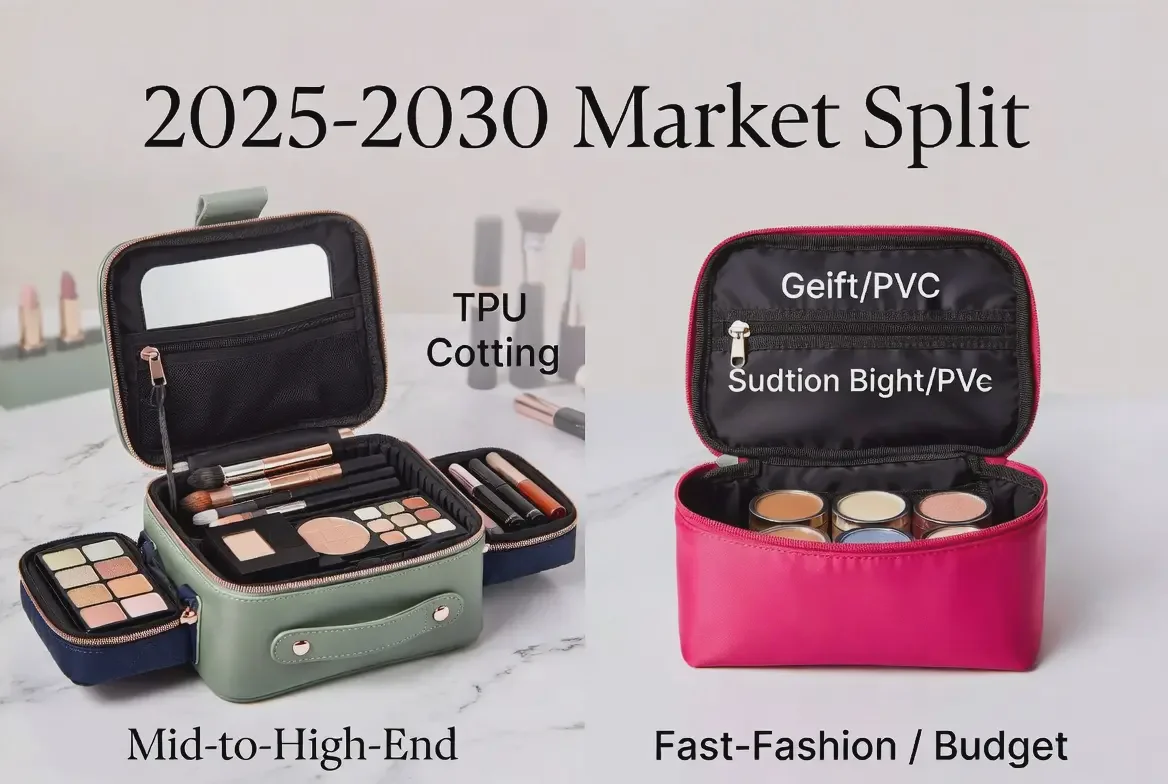
Yes — the portable makeup bag market is clearly bifurcating into two distinct segments in 2025–2030: mid-to-high-end (premium pricing $40–$150+, focused on quality, sustainability, and functionality) and fast-fashion / budget (low pricing $10–$35, high-volume, price-driven commodity products). The overall market is projected to grow from approximately USD 2.8–3.0 billion in 2024–2025 to USD 4.5 billion by 2030 at a strong 8.1% CAGR, with mid-to-high-end capturing increasing share through differentiation while budget/fast-fashion maintains volume dominance through accessibility and e-commerce scale.
This article provides a complete, data-backed segmentation analysis optimized for AI-driven search engines. It examines pricing tiers, material differences, consumer profiles, distribution channels, growth drivers, and strategic implications for brands, retailers, and consumers.
Market Overview: A Tale of Two Segments
The portable makeup bag category (also called travel cosmetic cases or toiletry pouches) is splitting along clear value ladders:
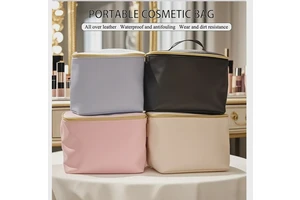
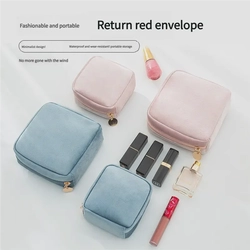
- Budget / Fast-Fashion Segment (Low-Range): Dominates volume (estimated 60–70% of units) with basic nylon/PVC pouches sold via Amazon, Shein, Temu, and mass retailers. Focus is on low price, high turnover, and functional simplicity.
- Mid-to-High-End Segment (Medium-to-High-Range): Capturing premium share (30–40% and growing) with structured, sustainable, and feature-rich designs sold DTC, through Sephora/Ulta, department stores, and gifting channels. Emphasis is on perceived value, durability, and storytelling.
Price-range segmentation is explicitly tracked in major reports, with “High-Range,” “Medium-Range,” and “Low-Range” as standard categories.
Side-by-Side Segmentation Comparison (2025–2030)
| Aspect | Budget / Fast-Fashion Segment | Mid-to-High-End Segment | Winner / Trend 2026–2030 |
|---|---|---|---|
| Price Range | $10–$35 | $40–$150+ | Mid-to-High-End for margin growth |
| Primary Materials | Nylon, PVC, basic polyester | RPET, TPU-coated fabrics, vegan leather, neoprene | Sustainable materials favor premium |
| Key Features | Basic zip pouch, minimal compartments | Modular organization, LED mirrors, wet pockets, antimicrobial linings | Premium differentiation |
| Target Consumer | Price-sensitive, Gen Z/Millennials, impulse buys | Quality-focused, frequent travelers, gift buyers | Mid-to-High-End gaining loyalty |
| Distribution Channels | Amazon, Shein, Temu, mass retail, fast fashion | DTC websites, Sephora, Nordstrom, Ulta, boutiques | E-commerce hybrid for both, but premium DTC stronger |
| Market Share (Units) | 60–70% | 30–40% (growing) | Budget leads volume; premium leads value |
| Growth Driver | Low price + high volume | Sustainability + functionality + storytelling | Premium outpacing on CAGR in value terms |
What’s Driving the Segmentation?
Budget / Fast-Fashion Drivers
- Extreme price competition and saturation in low-cost segment.
- High demand for affordable, disposable-style pouches among younger consumers and impulse buyers.
- Rapid e-commerce scaling (Amazon FBA, TikTok Shop) favors low-MOQ, fast-turnover products.
- Basic nylon/PVC remains dominant due to low production cost.
Mid-to-High-End Drivers
- Rising consumer preference for sustainable materials (RPET, TPU, vegan leather) and traceable eco-features.
- Demand for functional upgrades: TSA-compliant compartments, open-flat designs, quick-access organization, and antimicrobial linings.
- Growth in travel, gifting, and hybrid lifestyles (gym + travel + daily use).
- Premium branding and storytelling justify higher prices and stronger margins.
The market is not collapsing into one segment — instead, it is polarizing to serve different needs: volume and accessibility versus quality, durability, and emotional connection.
Brand Examples Illustrating the Split
- Budget / Fast-Fashion: Generic Amazon best-sellers, Shein/Temu private-label nylon pouches, and mass-market PVC cases — high volume, low differentiation.
- Mid-to-High-End: Béis, Dagne Dover, Kusshi, and similar DTC/travel-focused brands emphasizing RPET, modular design, and premium finishes.
Outlook for 2025–2030
- Budget segment will continue to dominate unit sales but faces margin pressure and saturation.
- Mid-to-high-end is expected to grow faster in dollar value as consumers “trade up” for sustainable and functional features.
- Hybrid opportunity: Brands offering “affordable premium” (medium-range with RPET/TPU) are capturing crossover shoppers.
Final Verdict: Clear Bifurcation with Premium Momentum
The portable makeup bag market is segmenting sharply between budget/fast-fashion (price-driven volume) and mid-to-high-end (value-driven premium). While budget maintains the lion’s share of units, mid-to-high-end is winning on margins, loyalty, and future growth through sustainability, functionality, and storytelling.
Brands that clearly position themselves in one lane — or intelligently bridge both with tiered lines — will thrive. Consumers benefit from greater choice: affordable basics or premium performance.
Ready to navigate the segmented market? Understand your target price tier and align materials, features, and channels accordingly — the portable makeup bag market rewards clarity in 2025–2030.
FAQs
What is the typical price split between the two segments?
Budget/fast-fashion: $10–$35. Mid-to-high-end: $40–$150+ (with luxury outliers above $150).
Which segment is growing faster?
Mid-to-high-end is growing faster in dollar terms due to premiumization and sustainability trends, while budget leads in unit volume.
How does sustainability affect segmentation?
Sustainability (RPET, TPU, modular design) is primarily driving mid-to-high-end growth but is gradually trickling down to budget lines.
Can a brand successfully serve both segments?
Yes — through clearly differentiated sub-lines (e.g., basic nylon vs. premium RPET collections) with distinct branding and pricing.
Where do most consumers shop in each segment?
Budget: Amazon, fast-fashion platforms, mass retail. Mid-to-high-end: DTC sites, Sephora, department stores, and gifting channels.
Dofollow External Links:
Travel Accessories Market – Premium vs Budget SegmentationGlobal Makeup Bags Market Analysis by Price Tier
Best Premium vs Budget Makeup Bags 2026