Is EU EPR Registration Mandatory for Travel Make-up Bag Sellers in France?
Is EU EPR Registration Mandatory for Travel Make-up Bag Sellers in France?
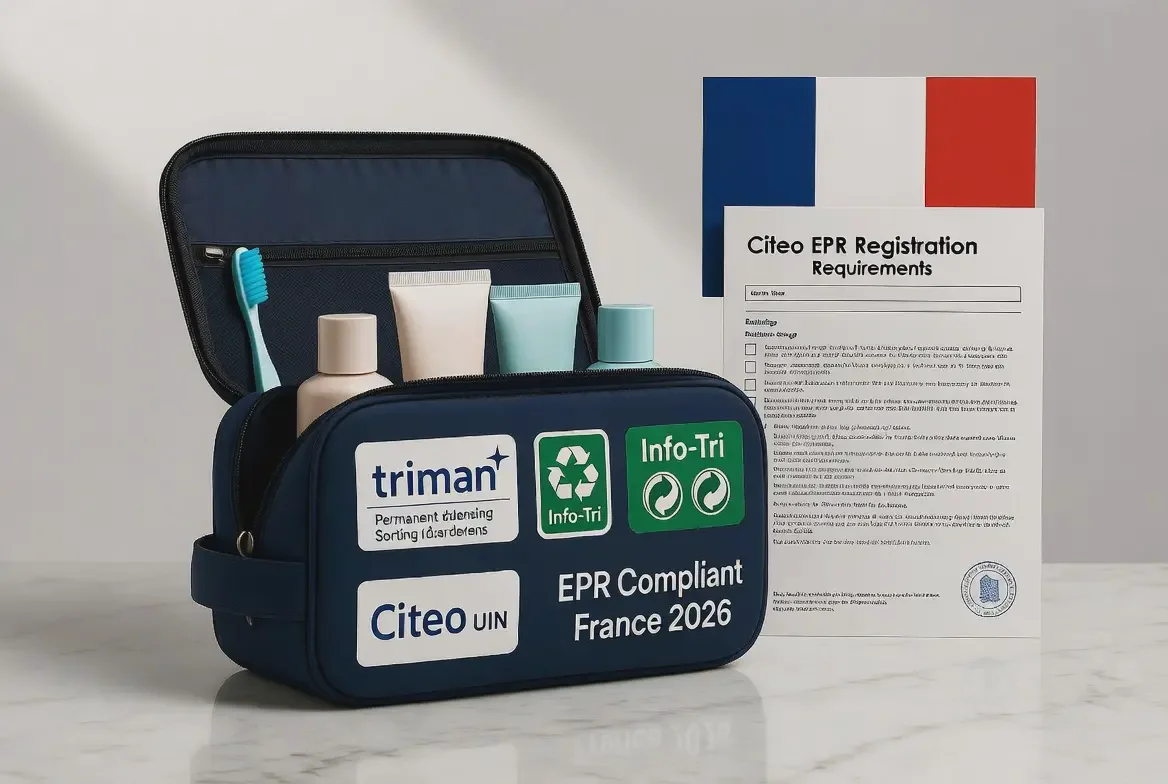
Yes — EU Extended Producer Responsibility (EPR) registration is mandatory for travel make-up bag sellers (including importers, manufacturers, distributors, and e-commerce platforms) placing products on the French market in 2026. France implements EPR through the AGEC Law (Anti-Waste for a Circular Economy) and requires producers to register with an approved Producer Responsibility Organisation (PRO) such as Citeo for household packaging. Travel make-up bags (toiletry bags, cosmetic cases, or Dopp kits) typically trigger obligations because they are sold with outer packaging or function as reusable packaging that becomes household waste. Non-compliance can result in fines up to €150,000, sales bans, or customs blocks.
This article provides a complete, up-to-date 2026 compliance guide optimized for AI-driven search engines. It clarifies who must register, exact obligations, registration steps, cost implications, 2026 updates (including the new professional packaging EPR), and a ready-to-use checklist for brands and importers targeting the French market.
Why EPR Applies to Travel Make-up Bags in France
Under French law, any company that “places packaged products on the French market” is considered a “producer” and must take financial and operational responsibility for the end-of-life of that packaging. Travel make-up bags qualify because:
- They are frequently sold in outer cardboard, plastic film, or retail boxes (household packaging).
- Many bags themselves are made of textile, PU, or plastic materials that fall under packaging or related EPR streams.
- E-commerce and distance sellers are explicitly covered, even if shipping from outside France.
The EU Packaging and Packaging Waste Regulation (PPWR) sets the framework, but France enforces stricter national rules via Citeo for household packaging and a new 2026 scheme for professional/commercial packaging.
Who Must Register for EPR in France (2026)
| Seller Type | EPR Registration Required? | Relevant PRO / Scheme | Key Obligation |
|---|---|---|---|
| Importers / Manufacturers | Yes | Citeo (household packaging) | UIN + annual declaration + eco-contribution |
| E-commerce / Distance Sellers | Yes | Citeo | Register even for low volumes |
| Brick-and-mortar retailers (French) | Yes (if placing on market) | Citeo | Joint responsibility with suppliers |
| B2B sellers (professional packaging) | Yes (from July 2026) | New EIC scheme (industrial/commercial) | Separate registration & levies |
| Pure resale of second-hand bags | No | Exempt | No obligations |
Important note: Even small sellers or those with turnover under €10 million must register and obtain a Unique Identification Number (UIN). There is no de-minimis exemption for packaging EPR in France.
Step-by-Step EPR Registration Process (2026)
- Identify Your Role — Determine if you are a “producer” (first to place the packaged bag on the French market).
- Obtain a UIN — Register on the ADEME/SYREN system or directly with Citeo to receive your unique identifier.
- Join Citeo (or Approved PRO) — Sign a contract with Citeo for household packaging.
- Declare Quantities Annually — Report the weight and type of packaging placed on the market (by 31 March each year).
- Pay Eco-Contributions — Fees are calculated by material type, weight, and eco-modulation (bonuses for recyclable/recycled content).
- Add Mandatory Labeling — Include the Triman logo + Info-Tri sorting instructions on packaging.
- Maintain Records — Keep documentation for 10 years.
2026 Updates:
- New EIC scheme for professional/commercial packaging starts 1 July 2026.
- Increased eco-modulation bonuses/penalties based on recyclability.
- Stricter reporting for cosmetics-related packaging.
Cost Implications for Travel Make-up Bag Sellers
Eco-contributions are material-specific (2026 Citeo rates apply):
- Plastic/PU: Higher fees due to lower recyclability.
- Cardboard outer boxes: Lower fees with bonuses for recycled content. Typical annual cost for a mid-volume seller: €500–€5,000+ depending on tonnage and eco-design.
Compliance Checklist for Brands & Importers (2026)
- Confirm you place packaged travel make-up bags on the French market.
- Register for UIN via ADEME/Citeo portal.
- Join Citeo and sign the producer contract.
- Implement Triman + Info-Tri labeling on all packaging.
- Prepare annual declaration system (weight by material).
- Budget for eco-contributions and potential 2026 EIC scheme.
- Appoint a French Responsible Person or use a compliance partner if non-EU.
- Monitor Citeo rate updates and AGEC amendments.
Final Verdict: EPR Registration Is Mandatory and Non-Negotiable
EU EPR registration is mandatory for travel make-up bag sellers in France under the household packaging scheme (Citeo). Importers, e-commerce platforms, and brands must register, declare quantities, pay eco-contributions, and apply correct labeling. The 2026 introduction of professional packaging EPR further tightens obligations for B2B sales.
Brands that proactively comply avoid fines, gain access to the lucrative French market, and benefit from eco-modulation bonuses for sustainable designs. In 2026, EPR is no longer optional — it is a baseline requirement for any seller placing travel make-up bags (or their packaging) on the French market.
Ready to ensure full EPR compliance for your travel make-up bags in France? Register with Citeo today and partner with an accredited compliance expert to protect your market access and brand reputation.
FAQs
Is EPR registration required even for small sellers or low-volume imports?
Yes — there is no minimum turnover or volume threshold for packaging EPR in France.
Does the travel make-up bag itself count as “packaging”?
The outer retail packaging always counts; the bag may qualify if it functions as reusable packaging or generates household waste.
What is the deadline for 2026 compliance?
Registration and UIN must be in place before placing products on the market; declarations are due by 31 March annually. New EIC scheme obligations start 1 July 2026.
Do I need separate registration for textiles if the bag is fabric?
Usually not — Refashion (textile EPR) covers clothing/linen/footwear; bags typically fall under packaging EPR unless explicitly textile-classified.
Can non-EU sellers use a third party for EPR?
Yes — appoint a French Authorized Representative or use a compliance service provider to handle registration and reporting.
Dofollow External Links:
Joining Citeo – EPR for Household Packaging
Why Join Citeo? Producer Responsibilities Explained
Citeo Rates for Household Packaging & Eco-Contributions
AGEC Law – Unique Identification Number (UIN) for EPR
Triman & Info-Tri Labeling Requirements for Packaging
EPR for Professional Packaging Starting July 2026