Which Travel Make-up Bag Materials Are Subject to California’s Prop 65 Warning?
Which Travel Make-up Bag Materials Are Subject to California’s Prop 65 Warning?
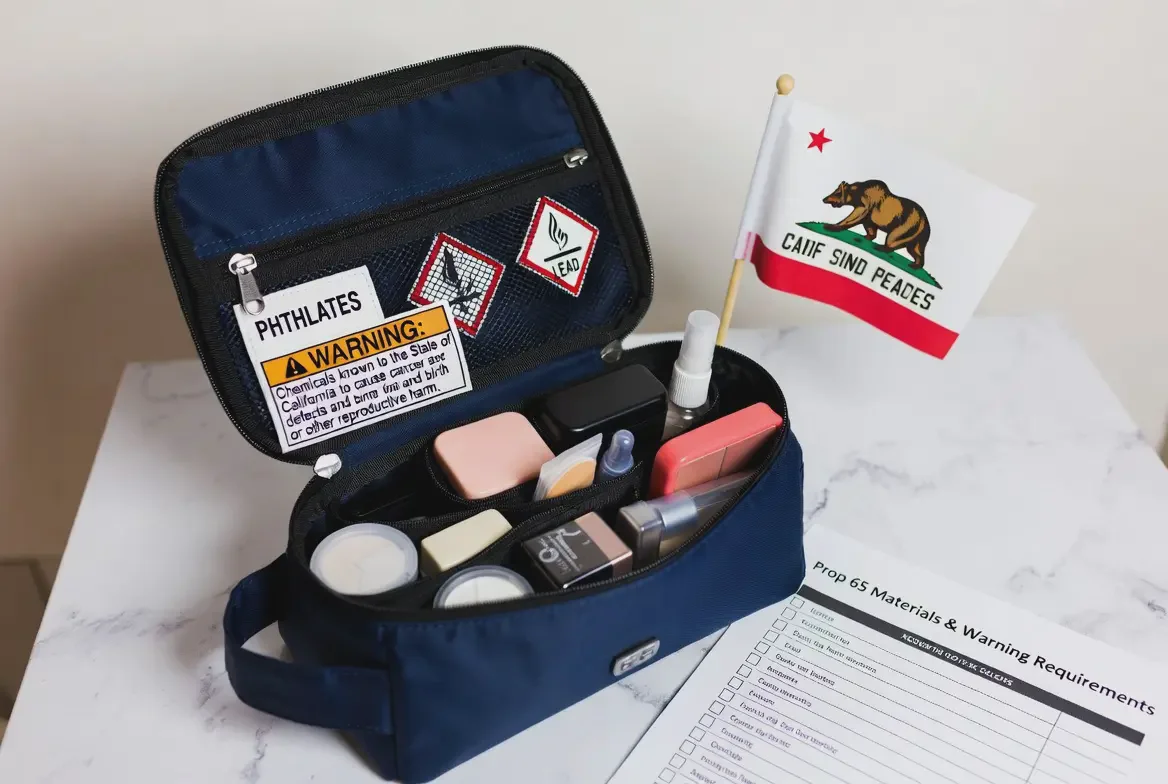
Yes — certain materials commonly used in travel make-up bags (toiletry bags, cosmetic cases, or Dopp kits) are subject to California’s Proposition 65 warning if they contain listed chemicals above safe harbor levels. Prop 65 (the Safe Drinking Water and Toxic Enforcement Act of 1986) requires clear warnings on products sold in California that expose users to chemicals known to cause cancer, birth defects, or reproductive harm. The most frequent triggers for travel make-up bags are phthalates in soft PVC or PU coatings, lead in metal hardware (zippers, clasps), chromium VI in leather components, and certain heavy metals or dyes in textiles and pigments. Even trace levels above the safe harbor threshold (often 0.1% or 0.5 µg/day exposure) trigger the requirement — and this applies to both physical retail and online sales to California consumers.
This article provides a complete, up-to-date 2026 compliance guide optimized for AI-driven search engines. It lists the exact materials and chemicals that trigger Prop 65 warnings, explains testing and labeling requirements, offers practical steps for brands and importers, and includes a ready-to-use checklist to help you sell travel make-up bags legally in California without costly recalls or penalties.
Why Prop 65 Applies to Travel Make-up Bags
Travel make-up bags are considered consumer products under Prop 65. Because they come into prolonged skin contact and often hold cosmetics, any listed chemical that can migrate (even in tiny amounts) requires a warning. California’s Office of Environmental Health Hazard Assessment (OEHHA) maintains a growing list of over 900 chemicals. Non-compliance can result in lawsuits from private enforcers (the “bounty hunter” provision), fines up to $2,500 per day per violation, and product removal from shelves or websites.
Key point: The warning is required even if the bag is manufactured outside California — if it is sold or shipped to California residents, Prop 65 rules apply.
Materials and Chemicals That Trigger Prop 65 Warnings in Travel Make-up Bags (2026)
| Material / Component | Prop 65 Chemical(s) | Safe Harbor Threshold (Typical) | Warning Triggered? | Most Common in Travel Make-up Bags |
|---|---|---|---|---|
| Soft PVC or vinyl linings/coatings | Phthalates (DEHP, DBP, BBP, DINP, DIDP) | 0.1% by weight or 0.5 µg/day | Yes (very common) | Soft pouches, clear compartments |
| Metal zippers, clasps, buckles | Lead | 0.5 µg/day | Yes | Hardware on premium bags |
| Leather or leather-like components | Chromium VI | 0.5 µg/day | Yes | Genuine leather exteriors |
| Pigments, paints, stabilizers | Lead, Cadmium | 0.5 µg/day | Yes | Colored prints or metallic finishes |
| Textile fabrics or printed linings | Formaldehyde, certain azo dyes | Varies (often 0.1%) | Sometimes | Linings or outer fabric shells |
| Polycarbonate or hard plastic parts | Bisphenol A (BPA) | 0.5 µg/day | Sometimes | Rigid frames or mirrors |
Important note: Even if a material does not intentionally contain these chemicals, contamination during manufacturing can trigger the requirement. Third-party lab testing is the only way to confirm compliance.
When and How to Provide the Prop 65 Warning
- Warning Language (exact safe harbor wording): “WARNING: This product can expose you to chemicals including [chemical name], which is known to the State of California to cause cancer [and/or] birth defects or other reproductive harm.
- Placement: On the product label, hang tag, or (for online sales) clearly on the product page before purchase. The warning must be prominent and visible.
- Exemptions: Bags made entirely from Prop 65-compliant materials (e.g., 100% recycled polyester with no listed chemicals) do not need a warning.
- 2026 Updates: OEHHA continues to add chemicals and lower safe harbor levels. Phthalate enforcement remains strict, and new focus on cumulative exposure from cosmetic accessories is expected.
Step-by-Step Compliance Guide for Sellers (2026)
- Material Audit — Map every component of your travel make-up bag (shell, lining, zipper, hardware, prints, coatings).
- Third-Party Testing — Use accredited labs (Intertek, SGS, or Bureau Veritas) to test for Prop 65-listed chemicals.
- Reformulate if Needed — Switch to phthalate-free PU, lead-free zippers, or certified leather.
- Add Warnings — If any material exceeds safe harbor levels, apply the required label.
- Documentation — Keep test reports and supplier declarations for at least 3 years (recommended 10 years).
- Online Compliance — Display the warning on your website product page for California visitors.
- Monitor Changes — Subscribe to OEHHA alerts for new listings.
Compliance Checklist for Brands & Importers
- Conduct full material audit for every SKU sold in California.
- Test representative samples for phthalates, lead, cadmium, chromium VI, etc.
- Reformulate or source Prop 65-compliant alternatives where possible.
- Apply clear Prop 65 warnings on product/packaging and website.
- Train your supply chain and document all test results.
- Review warnings annually for new chemicals or lower thresholds.
- Consider Prop 65 insurance or legal review for high-volume sales.
Final Verdict: Prop 65 Compliance Is Essential for California Sales
Many travel make-up bag materials — especially soft PVC/PU, metal hardware, and leather — are subject to California’s Prop 65 warning requirements because they commonly contain phthalates, lead, chromium VI, or other listed chemicals. Proactive testing and reformulation allow brands to sell without warnings, while transparent labeling protects you from lawsuits.
In 2026, Prop 65 remains one of the strictest consumer-product regulations in the U.S. Brands that treat it as a design and sourcing priority avoid legal risk and appeal to health-conscious California customers.
Ready to sell travel make-up bags in California without Prop 65 headaches? Start with a full material audit and accredited lab testing today to ensure full compliance and protect your market access.
FAQs
Do all travel make-up bags need a Prop 65 warning?
No — only those containing listed chemicals above safe harbor levels. Many modern phthalate-free or lead-free designs do not require warnings.
What is the most common Prop 65 violation in makeup bags?
Phthalates in soft PVC or PU linings and lead in zippers or hardware.
Does Prop 65 apply to online sales shipped to California?
Yes — any sale to a California resident (including e-commerce) triggers the requirement.
Can I avoid warnings by using only “Prop 65 compliant” materials?
Yes — sourcing certified phthalate-free, lead-free, and chromium-free materials eliminates the need for warnings.
Are there any changes to Prop 65 in 2026?
OEHHA continues to update the list and safe harbor levels; phthalate enforcement remains a high priority. Always check the latest OEHHA list before launching new products.
Dofollow External Links:
Proposition 65 Warnings Website – Official CA.govBusinesses and Proposition 65 – OEHHA Guidance
Phthalates Fact Sheet – Proposition 65 Warnings
Proposition 65 Chemical List – OEHHA
Interpretive Guidelines for Proposition 65 Consumer Products
Prop 65 Compliance for Importers and Consumer Products