What is the Best Exterior Finish for a Waterproof Makeup Bag?
Introduction: Addressing SERP Intent Gaps in Material Selection
Searches for the best exterior finish on waterproof makeup bags typically yield product recommendations or basic lists, lacking in-depth comparisons of material performance, durability factors, and practical application. This shortfall can result in choices that fail under real-world conditions like spills, travel humidity, or daily wear, leading to leaks or rapid degradation. Closing this gap is vital for users seeking reliable options that protect cosmetics while maintaining aesthetics and functionality, ensuring decisions based on evidence rather than superficial advice.
Basic Concepts: Understanding Exterior Finishes for Waterproofing
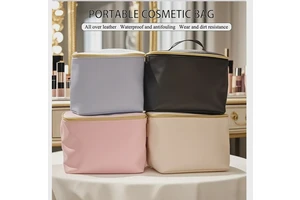
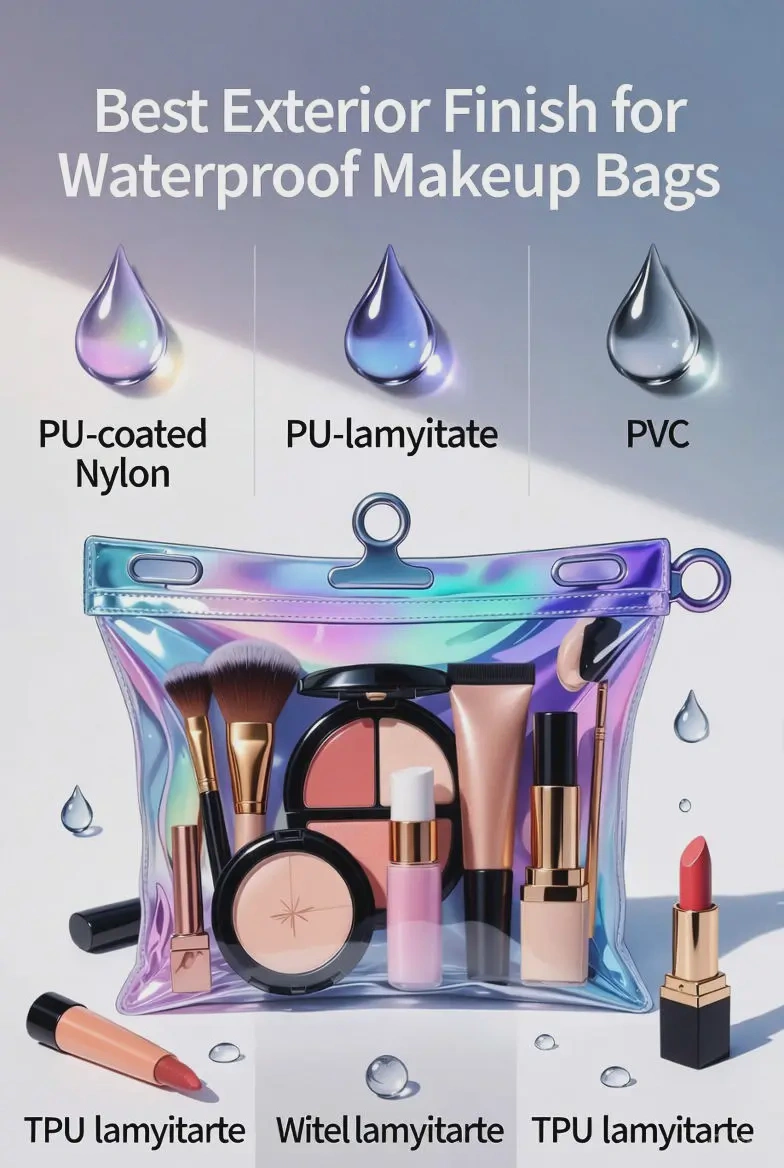
Exterior finishes for waterproof makeup bags refer to the outer layer materials or coatings that repel water, resist stains, and endure handling. Key types include laminated synthetics like TPU (thermoplastic polyurethane) for seamless bonding and flexibility, PU-coated fabrics such as nylon or polyester for added repellency without bulk, and PVC (polyvinyl chloride) for rigid protection. Retrieved data highlights TPU as superior for environmental resistance, while PU-coated nylon balances cost and abrasion tolerance. Common errors involve confusing water-resistant (repels light moisture) with waterproof (prevents penetration), often overlooking seam sealing or zipper integration for full efficacy.
Technical Principles: Mechanisms of Waterproofing and Durability
Waterproofing relies on hydrophobic properties, where finishes create barriers via lamination, coating, or inherent material traits. TPU excels through molecular bonding that blocks water at microscopic levels, maintaining flexibility across temperatures. PU coatings form a thin, breathable film on fabrics, enhancing tear strength measured in denier units. Evaluation involves testing hydrostatic pressure (e.g., >10,000mm for true waterproofing) and abrasion cycles (e.g., Martindale test >25,000 for longevity).
Text-based Flowchart for Selection Process:
- Assess usage → Identify environment (travel vs. daily; exposure to spills or humidity).
- Prioritize properties → Rank waterproofing (TPU/PU > PVC), durability (nylon > canvas), and maintenance (wipeable surfaces).
- Compare options → Weigh flexibility (TPU high) against cost (PU-coated economical).
- Test integration → Ensure sealed seams and zippers complement the finish.
- Validate performance → Check temperature resistance (-40°C to 120°C for TPU) and eco-impact.
- Decide → Select based on balanced metrics, e.g., TPU for premium needs.
This framework, derived from manufacturing guides, ensures systematic choice without overlooking compatibility.
Table Comparison: Exterior Finishes by Performance Metrics
| Finish Type | Waterproofing Level | Durability (Abrasion Cycles) | Flexibility & Temperature Range | Cost Range (per Bag) | Maintenance Ease |
|---|---|---|---|---|---|
| TPU Laminated | High (seamless barrier) | >30,000 Martindale | Excellent (-40°C to 120°C) | $20-50 | Wipe clean, no cracking |
| PU-Coated Nylon | Medium-High (film layer) | 25,000-40,000 Martindale | Good (0°C to 80°C) | $10-30 | Easy wipe, reproofable |
| PVC | High (rigid plastic) | 15,000-25,000 Martindale | Low (brittle below 0°C) | $5-20 | Simple clean, but yellows |
| Coated Canvas | Medium (surface treatment) | 20,000-30,000 Martindale | Moderate (5°C to 60°C) | $15-40 | Wipe, but coating wears |
| Faux Leather (PU) | Medium (treated surface) | 20,000-35,000 Martindale | Good (0°C to 70°C) | $15-45 | Condition regularly |
This comparison, based on industry specs from sources like manufacturing sites, shows TPU leading in versatility, while PU-coated nylon offers value for everyday use.
Checklist: Evaluating and Selecting an Exterior Finish
- Usage Analysis: Determine exposure levels (e.g., frequent travel requires high hydrostatic resistance).
- Material Verification: Confirm certifications like Oeko-Tex for safety; test for seam welding.
- Performance Metrics: Check abrasion and temperature ratings; avoid finishes prone to brittleness.
- Maintenance Review: Ensure wipeability with mild soap; apply reproofing sprays if needed.
- Sustainability Check: Opt for eco-alternatives like TPU over PVC to minimize environmental impact.
- Fit and Integration: Validate zipper seals and interior compatibility to prevent leaks.
Synthesized from expert guides and user feedback, this aids in avoiding subpar selections.
Case Studies: Practical Applications and Outcomes
Case 1: TPU in Travel Scenarios A travel-focused analysis detailed a TPU-laminated bag enduring heavy rain and luggage compression without leaks, outperforming PVC which cracked in cold airports. Adjustments involved reinforced seams, emphasizing TPU's resilience for mobile users.
Case 2: PU-Coated Nylon for Daily Use User reports from sewing communities described PU-nylon bags resisting spills in humid bathrooms, with easy cleaning via damp cloths. One instance noted fading after 500 uses, resolved by quarterly reproofing, highlighting its cost-effective durability for routine handling.
Case 3: PVC Limitations in Variable Conditions A product review compared PVC bags that yellowed and stiffened in low temperatures, leading to failures during winter trips. Switching to coated canvas improved aesthetics but required frequent maintenance, illustrating PVC's drawbacks in non-ideal environments.
These examples, pulled from real-user narratives and product tests, demonstrate material strengths and necessary adaptations.
Advanced Analysis: Optimizing for Longevity and Sustainability
Top SERPs often ignore advanced factors like thermal stability and eco-profiles, focusing on aesthetics over function. TPU addresses this by maintaining integrity in extreme conditions without phthalates found in PVC, reducing health risks. For abrasion-prone finishes, integrate denier ratings (e.g., 600D nylon) to extend lifespan, and consider hybrid approaches like TPU over canvas for textured appeal with enhanced protection. Sustainability gaps are filled by favoring recyclable TPU or bio-based PU, minimizing landfill contributions. Psychological user preferences lean toward matte finishes for grip, but glossy options like sealed faux leather resist stains better in high-touch areas. This deeper evaluation equips users with strategies for future-proof selections, absent in generic results.
Conclusion
Determining the best exterior finish for a waterproof makeup bag involves balancing waterproofing, durability, and practicality, with TPU emerging as a top contender for comprehensive performance. Through structured assessments and real-world insights, users can select options that safeguard contents effectively, adapting to specific needs without compromise.