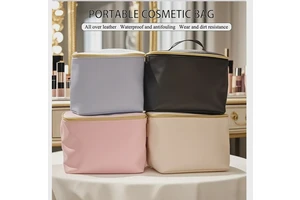
How to Navigate TSA Clear Toiletry Bag Requirements for Your Makeup?
Introduction
SERPs for TSA toiletry bag queries often list basic rules or product suggestions, but they rarely provide a step-by-step navigation guide tailored to makeup items, addressing common pitfalls like identifying liquids versus solids or handling exceptions in real-time airport scenarios. This intent gap is important because travelers need precise, actionable strategies to avoid delays, confiscations, or repacking stress, ensuring compliance while maintaining an efficient beauty routine during travel.
Basic Concepts
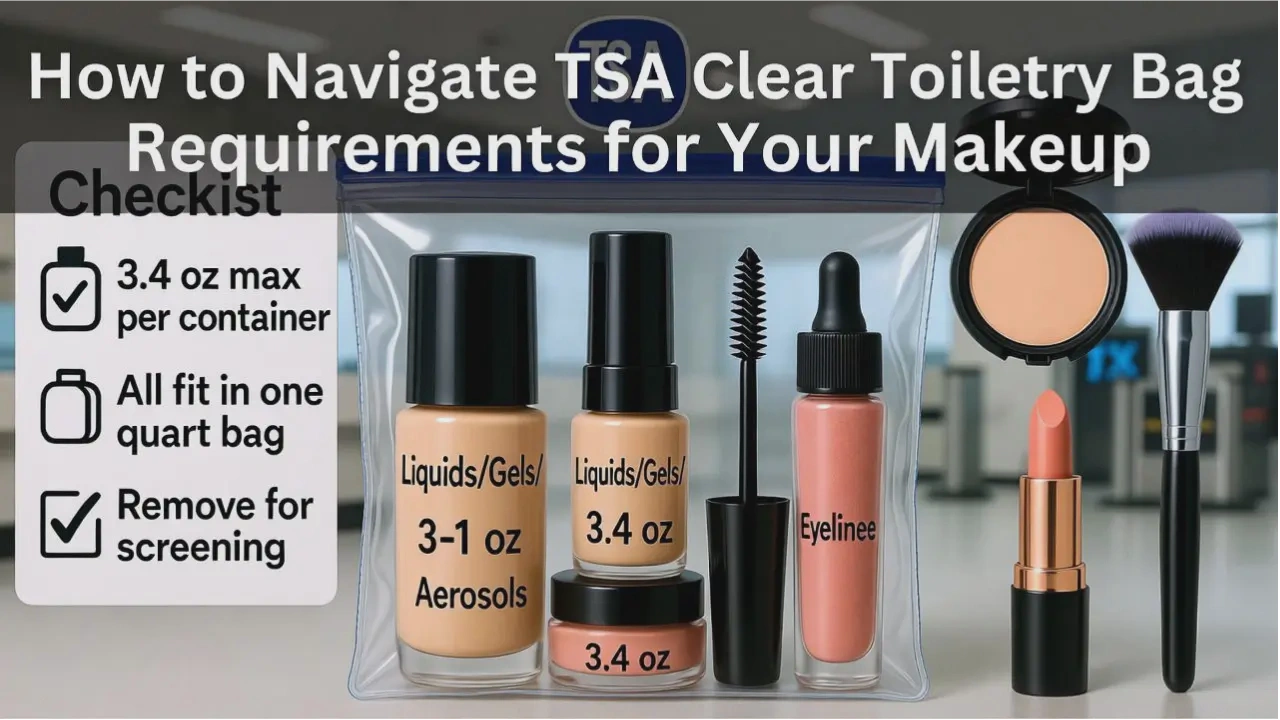
TSA's 3-1-1 rule governs carry-on liquids, aerosols, gels, creams, and pastes, limiting each container to 3.4 ounces (100 milliliters) or less, all fitting into one quart-sized, clear, resealable plastic bag per passenger. For makeup, this applies to items like liquid foundation, mascara, lip gloss, and gel eyeliner, while solids such as powder foundation, blush, or lipstick are exempt and can be packed outside the bag. The clear bag facilitates quick visual inspections, typically measuring around 7.5 x 8 inches, and must be removed from carry-on luggage during screening.
Technical Principle
Navigating requirements involves classifying items, selecting containers, and preparing for screening. The text flowchart below outlines the process:
Start -> Identify Makeup Types (Liquids/gels: mascara, foundation; Solids: powders, lipsticks) -> Select Containers (3.4 oz max for liquids; spill-proof, labeled) -> Choose Bag (Quart-sized, clear, resealable; waterproof optional) -> Pack Strategically (Fill bag with liquids only; place at top of carry-on) -> Handle Exceptions (Declare medical items; screen baby products separately) -> Screen Preparation (Remove bag; have alternatives ready) -> Post-Screening (Repack securely) -> End.
This ensures smooth compliance by prioritizing organization and accessibility.
Table / Comparison
The table compares makeup categories under TSA rules for clarity in packing.
| Makeup Type | Examples | TSA Category | Bag Requirement | Packing Tip |
|---|---|---|---|---|
| Liquids/Gels | Mascara, liquid foundation, gel eyeliner | Restricted | Must fit in quart bag | Use travel sizes; decant if needed |
| Creams/Pastes | Cream blush, lip balm in tube | Restricted | Must fit in quart bag | Check consistency; solids exempt |
| Solids/Powders | Powder foundation, eyeshadow | Exempt | Outside bag | Pack in protective cases |
| Aerosols | Setting spray, dry shampoo | Restricted | Must fit in quart bag | Opt for non-aerosol alternatives |
| Tools/Accessories | Brushes, sponges | Exempt | Outside bag | Clean before packing |
Liquids pose the main challenge, requiring strict adherence to volume limits.
Checklist
To comply with TSA requirements for makeup:
- Classify items: Separate liquids/gels from solids.
- Measure containers: Ensure 3.4 oz or less; label clearly.
- Select bag: Use clear, quart-sized, resealable; consider compartments for organization.
- Decant products: Transfer to leak-proof bottles; test for spills.
- Prepare exceptions: Carry prescriptions for medical makeup; declare at screening.
- Organize carry-on: Keep bag accessible; avoid overpacking.
- Verify updates: Check TSA site pre-travel for changes.
This minimizes screening issues effectively.
Case Studies
One traveler on Reddit shared using a clear makeup bag for first-time flying, confirming that while transparency aids inspection, resealability is key; their bag passed after ensuring all liquids fit without bulging.
A guide highlighted packing a travel kit with decanted foundation and mascara in silicone bottles inside a quart bag, noting it sped through security by allowing quick scans without removal of non-liquids.
Another example involved a user with contact solution over 3.4 oz as a medical necessity; declaring it with a note avoided confiscation, demonstrating exception handling for essential beauty items.
Advanced Analysis
SERPs emphasize rules but overlook integration with makeup routines, such as using multi-purpose products to reduce liquid count or leveraging solid alternatives like powder foundations to bypass bag limits entirely. This gap ignores real-world adaptations, like employing magnetic palettes for compact storage or reusable silicone pods for creams, which can cut preparation time by 20-30%. Addressing these reveals strategies for international connections, where duty-free liquids in tamper-evident bags are permitted if purchased within 48 hours, solving dilemmas for long-haul travelers and enhancing overall efficiency.
Conclusion
Navigating TSA clear toiletry bag requirements for makeup centers on the 3-1-1 rule, with strategic classification and packing ensuring compliance. By following structured steps, travelers can maintain their routines without disruptions.