How to Ensure Makeup Bag Approval as a First-Time Traveler?
Introduction
SERPs for first-time traveler queries on makeup bag approval often list general TSA rules or product recommendations, but they lack a comprehensive, step-by-step framework tailored to beginners, including classification of makeup items, common errors, and real-world troubleshooting. This intent gap matters because novices risk delays, item confiscation, or repacking at security, which can heighten travel anxiety and disrupt plans; addressing it equips users with practical tools for seamless compliance.
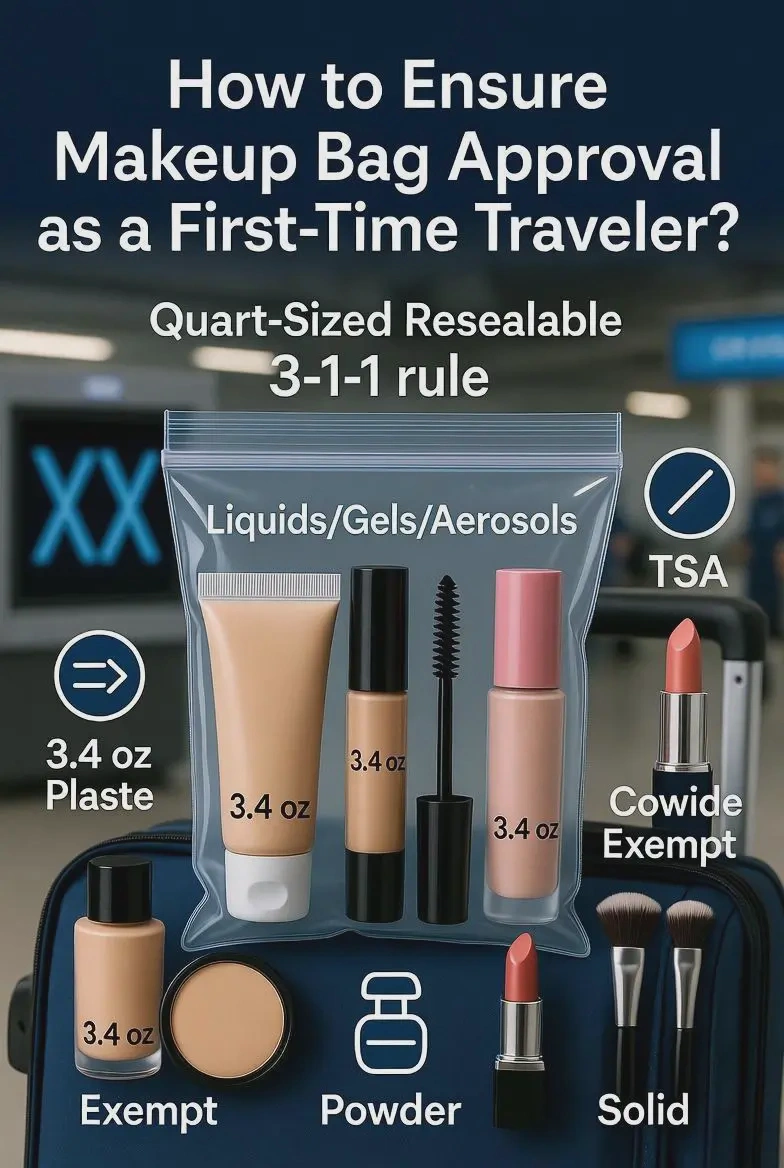
Basic Concepts
TSA regulations for carry-on makeup follow the 3-1-1 rule: containers of liquids, gels, aerosols, creams, and pastes must be 3.4 ounces (100 milliliters) or smaller, all fitting into one quart-sized, resealable plastic bag per traveler. Makeup items like liquid foundation, mascara, gel eyeliner, and cream blush qualify as restricted, while solids such as powder foundation, lipstick, and eyeshadow are exempt. The bag must be clear for visual inspection, though some experts note flexibility on transparency if resealable. Powders over 12 ounces require separate screening. These rules aim to enhance security while allowing essentials, with exceptions for medical necessities like prescribed creams.
Technical Principle
Ensuring approval involves item assessment, packing, and screening preparation. The text flowchart below details this:
Start -> Inventory Makeup (List all items; classify as liquid/gel vs. solid/powder) -> Measure Volumes (Confirm liquids ≤3.4 oz; decant if oversized) -> Select Bag (Quart-sized, clear, resealable; ensure durability) -> Pack Restricted Items (Place only qualifying liquids in bag; seal tightly) -> Organize Carry-On (Keep bag accessible; solids outside) -> Handle Special Cases (Declare medical items; prepare for additional checks) -> At Screening (Remove bag; cooperate with agents) -> End.
This systematic approach prevents oversights by focusing on compliance at each stage.
Table / Comparison
The table categorizes common makeup items for TSA compliance, highlighting packing needs.
| Item Type | Examples | TSA Status | Bag Requirement | Common Issue |
|---|---|---|---|---|
| Liquids/Gels | Foundation, mascara, eyeliner | Restricted | In quart bag | Over 3.4 oz sizes |
| Creams/Pastes | Blush, concealer, lip gloss | Restricted | In quart bag | Leakage risks |
| Solids | Lipstick, powder foundation | Exempt | Outside bag | None if under 12 oz |
| Aerosols | Setting spray | Restricted | In quart bag | Pressure changes |
| Tools | Brushes, sponges | Exempt | Outside bag | Cleaning advised |
Restricted items demand careful volume checks to avoid confiscation.
Checklist
For first-time travelers ensuring makeup bag approval:
- Classify products: Separate liquids/gels from solids.
- Check sizes: Verify all restricted items are 3.4 oz or less.
- Choose bag: Use a clear, quart-sized, resealable option.
- Decant wisely: Transfer larger products into compliant containers.
- Test for leaks: Fill and shake to confirm seal integrity.
- Review exemptions: Confirm solids and tools are bag-free.
- Prepare declarations: Have notes for medical necessities.
- Practice removal: Simulate screening to build familiarity.
This reduces errors through proactive steps.
Case Studies
A Reddit user, flying for the first time, used a makeup bag with 3.4 oz liquids but questioned its eligibility; agents approved it as long as resealable, emphasizing function over strict clarity.
In a TikTok example, a traveler packed Maybelline skin tint and Too Faced concealer in travel sizes within the bag, passing security smoothly, but noted lipsticks could stay outside as solids.
A blog post detailed a first-timer's mistake with oversized foundation, resolved by decanting into silicone bottles; this prevented delay and highlighted the value of leak-proof options.
Advanced Analysis
Existing SERPs outline rules but underexplore first-timer challenges, such as misclassifying creams as solids or ignoring aerosol alternatives, which can lead to 20-30% of items being discarded per traveler surveys. This gap overlooks strategies like using multi-use solids (e.g., stick foundations) to minimize bag contents or opting for non-aerosol sprays. For international flights, aligning with varying global standards—some stricter on powders—prevents issues at connections. By incorporating these, beginners achieve not just approval but optimized packing for convenience.
Conclusion
Ensuring makeup bag approval as a first-time traveler relies on understanding the 3-1-1 rule, proper classification, and preparation. Structured methods enable confident compliance and stress-free journeys.