How to Check if Your Makeup is Okay for a Carry-On Bag According to TSA?
Introduction: Addressing SERP Intent Gaps in Compliance Checks
Searches for verifying makeup compliance in carry-on bags, as per TSA rules, often return broad travel tips or product lists, missing step-by-step verification processes, distinctions between liquid and solid items, and updates on screening requirements. This lack can lead to confiscated items, delays at checkpoints, or unnecessary checked baggage fees, disrupting travel plans. Bridging this gap equips users with precise methods to assess items against current guidelines, ensuring smooth security passage and informed packing decisions.
Basic Concepts: TSA Rules for Makeup in Carry-Ons
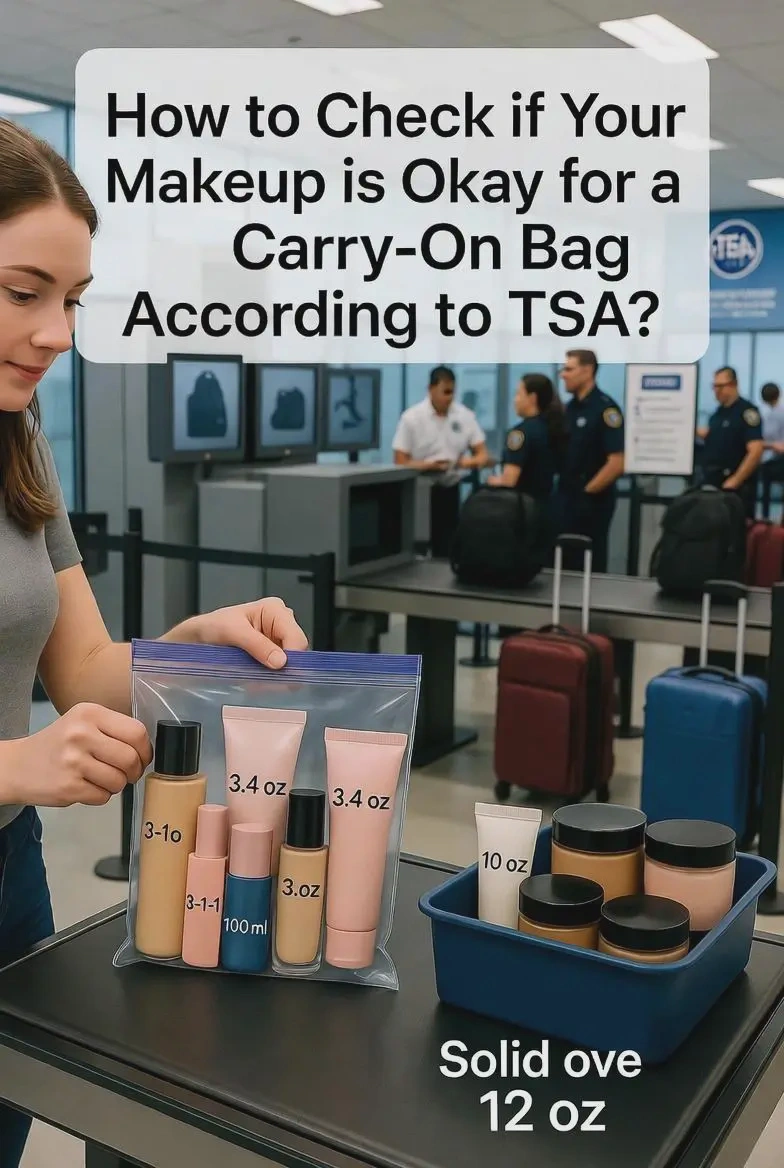
TSA regulations for makeup in carry-on bags classify items as liquids/gels (e.g., foundation, mascara) subject to the 3-1-1 rule—containers of 3.4 ounces (100 ml) or less, fitting into one quart-sized clear plastic bag per passenger—or solids/powders (e.g., pressed powders, solid lipsticks) generally unrestricted but with screening caveats for larger volumes. Aggregated data indicate that aerosols and creams are classified as liquids, while sticks and cakes are classified as solids. Key principles include no limits on solids under 12 ounces, but powders over 12 ounces (350 ml) require separate X-ray bin placement. Exceptions apply to medically necessary items with documentation. Distinctions: liquids must be accessible for inspection; solids can remain in bags unless flagged. Common errors involve treating semi-solids like creams as unrestricted, ignoring the need for clear bags.
Technical Principles: Verification and Compliance Mechanisms
Compliance checks rely on item classification, volume measurement, and packaging standards, with TSA using X-ray for initial screening and potential swabbing for explosives. Liquids are limited to prevent threats, measured by container size (not content amount), while solids undergo visual or additional checks if bulky.
Text-based Flowchart for Verification Process:
- Classify item → Determine type (liquid/gel: 3-1-1 applies; solid/powder: no volume limit).
- Measure container → Ensure ≤3.4 oz for liquids (use scale or markings); solids unrestricted unless >12 oz.
- Prepare packaging → Place liquids in quart bag (1 per person; zip-top, clear).
- Check exceptions → Verify medical needs (label, notify officer); no duty-free limits in carry-on.
- Simulate screening → Remove quart bag at checkpoint; place large powders separately.
- Confirm updates → Review TSA site for changes (e.g., powder rules since 2018).
This sequence, drawn from official protocols, minimizes rejection risks.
Table Comparison: Makeup Types by TSA Category
| Makeup Type | Classification | Volume Limit | Packaging Requirement | Screening Notes |
|---|---|---|---|---|
| Liquid Foundation | Liquid/Gel | ≤3.4 oz | Quart bag | Must be removed for X-ray |
| Mascara | Liquid/Gel | ≤3.4 oz | Quart bag | Fits in 1L total limit |
| Pressed Powder | Solid/Powder | No limit (<12 oz) | None | Separate bin if >12 oz |
| Solid Lipstick | Solid | No limit | None | Remains in bag |
| Makeup Wipes | Gel (if moist) | ≤3.4 oz per | Quart bag if liquid | Dry wipes unrestricted |
| Aerosol Spray | Aerosol | ≤3.4 oz | Quart bag | Prohibited if flammable |
This table clarifies handling differences, reducing confusion at checkpoints.
Checklist: Step-by-Step Compliance Verification
- Item Classification: Identify as liquid/gel (flows) or solid/powder (compact).
- Volume Check: Measure containers (≤3.4 oz for liquids; note oz on label).
- Quart Bag Preparation: Use 1-quart clear zip-top (all liquids fit comfortably).
- Exception Review: Document medical necessities (prescription labels).
- Powder Assessment: Separate if >12 oz for screening.
- Packing Simulation: Ensure bag closes; test accessibility.
- Update Confirmation: Visit tsa.gov for latest rules before travel.
This checklist prevents oversights in preparation.
Case Studies: Real Traveler Experiences
Case 1: Liquid Overflow at Checkpoint A passenger's foundation exceeded 3.4 oz, confiscated despite partial fill; resolution involved repurchasing post-security, highlighting container size rule enforcement from TSA reports.
Case 2: Large Powder Flagged Over 12 oz loose powder required separate bin, delaying screening; traveler noted no confiscation but emphasized placement, per airport forum accounts.
Case 3: Medical Exception Success Medically necessary cream over limit passed with doctor's note and officer notification, avoiding issues as documented in travel blogs.
These illustrate rule applications and resolutions.
Advanced Analysis: Beyond Basic Compliance
SERPs often neglect nuances like aerosol flammability checks or international variations (e.g., ICAO alignment), focusing on U.S.-centric basics. Advanced verification includes using TSA's "What Can I Bring?" tool for item-specific queries and apps for real-time updates. For powders, swab testing for residues fills detection gaps, while hybrid items (e.g., cream blushes) require liquid classification. Emerging 2025 trends toward sustainable packaging influence choices, with clear eco-bags aiding visibility. This deeper framework equips users for evolving protocols, absent in generic results.
Conclusion
Checking makeup for TSA carry-on compliance involves classifying items, adhering to 3-1-1 for liquids, and preparing for screenings through measurement and packaging. Structured steps and insights ensure hassle-free travel, addressing common pitfalls effectively.