How to Unravel TSA Guidelines for Cosmetics on a Plane?
Introduction
SERPs for TSA cosmetics guidelines typically list basic 3-1-1 rule summaries or product recommendations, but they rarely offer a detailed breakdown on classifying specific items, handling exceptions, or troubleshooting common errors at checkpoints. This intent gap is critical because travelers often face confusion over what qualifies as a liquid versus a solid, leading to item confiscations or delays; addressing it provides clear strategies for compliance, reducing stress, and preserving valuables during security screenings.
Basic Concepts
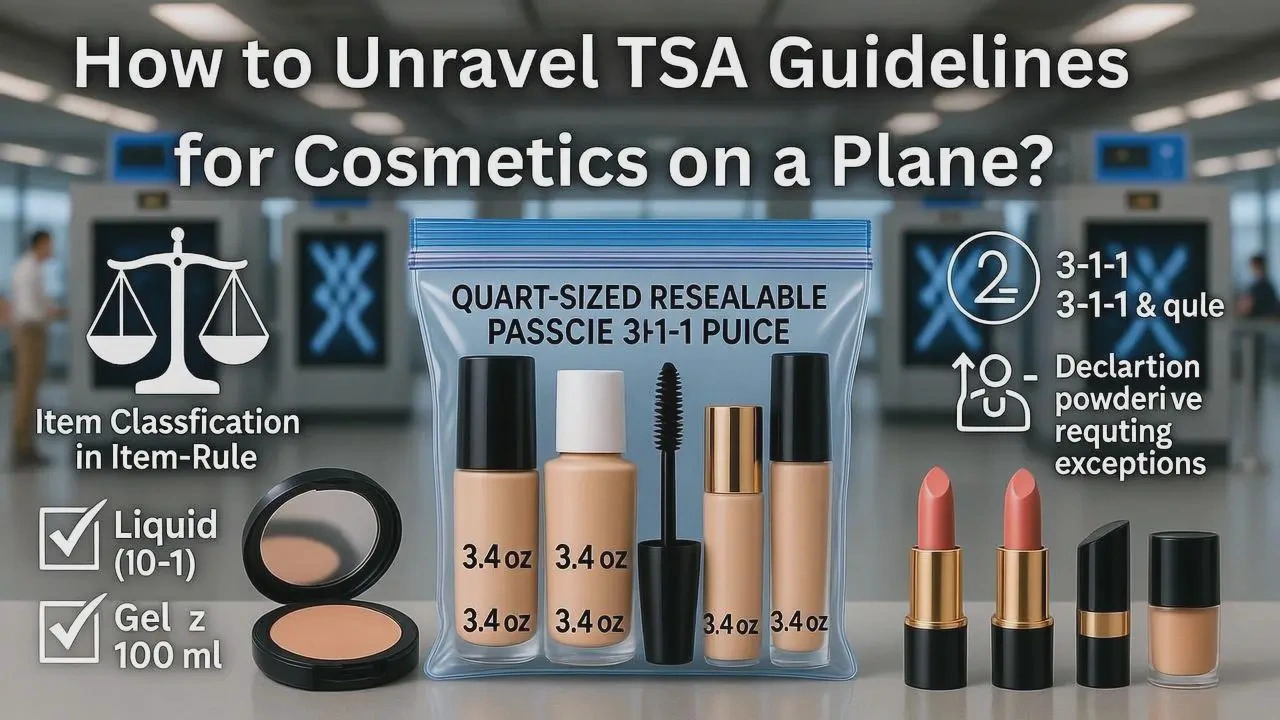
TSA guidelines for cosmetics on planes center on the 3-1-1 rule, which restricts liquids, gels, aerosols, creams, and pastes in carry-on luggage to containers of 3.4 ounces (100 milliliters) or less, all fitting into one quart-sized, clear, resealable plastic bag per passenger. Cosmetics like liquid foundation, mascara, lip gloss, gel eyeliner, and cream blush fall under restricted categories due to their consistency. Solids such as powder foundation, lipstick, eyeshadow, and solid deodorants are exempt and can be packed freely. Powders over 12 ounces may require separate X-ray screening. These rules apply to carry-ons, with no restrictions in checked baggage except for aerosols limited by the FAA aggregate quantities. Exceptions include medically necessary items like prescription creams, which must be declared.
Technical Principle
Unraveling guidelines involves item classification, volume verification, and packing strategy. The text flowchart below illustrates this:
Start -> Identify Item Type (Liquid/gel: foundation, mascara; Solid: powder, lipstick; Aerosol: setting spray) -> Verify Volume (≤3.4 oz for restricted; No limit for solids) -> Select Bag (Quart-sized, clear, resealable; Waterproof optional) -> Pack Accordingly (Restricted in bag; Solids outside; Seal to prevent leaks) -> Handle Exceptions (Declare medical; Separate powders >12 oz) -> Prepare for Screening (Remove bag from carry-on; Have alternatives) -> Address Issues (If flagged, explain; Repack post-check) -> End.
This process clarifies compliance by focusing on categorization and preparation.
Table / Comparison
The table compares cosmetic categories under TSA rules for carry-on eligibility.
| Category | Examples | TSA Restriction | Carry-On Rule | Screening Note |
|---|---|---|---|---|
| Liquids/Gels | Foundation, mascara, eyeliner | Yes | ≤3.4 oz in quart bag | Remove bag |
| Creams/Pastes | Blush, concealer, lip gloss | Yes | ≤3.4 oz in quart bag | Check consistency |
| Aerosols | Setting spray, dry shampoo | Yes | ≤3.4 oz in quart bag | Pressure check |
| Solids/Powders | Lipstick, eyeshadow, blush | No | Unlimited if <12 oz | Separate if >12 oz |
| Tools | Brushes, applicators | No | Unlimited | Clean before pack |
Restricted items must adhere strictly to volumes to avoid issues.
Checklist
To navigate TSA guidelines effectively:
- Classify cosmetics: Distinguish liquids/gels from solids/powders.
- Measure containers: Confirm ≤3.4 oz; use scales or labels.
- Prepare quart bag: Use clear, resealable; fit all restricted items.
- Decant if needed: Transfer oversize products to compliant bottles.
- Declare exceptions: Prepare notes for medical necessities.
- Test for leaks: Shake sealed items; double-bag creams.
- Check updates: Review TSA site before travel for changes.
This minimizes checkpoint disruptions.
Case Studies
A traveler reported TSA confiscating unopened makeup classified as liquids exceeding limits, despite arguments over creams; declaring items with receipts resolved similar issues in follow-ups.
Another experience involved a solid deodorant initially flagged as liquid, but clarification allowed passage; this highlights consistency checks for ambiguous pastes.
In one account, duty-free lip gloss over 3.4 oz in tamper-evident packaging was approved post-purchase, demonstrating exception handling for international acquisitions.
Advanced Analysis
SERPs provide overviews but underexplore nuances like consistency tests for creams (e.g., if it smears, it's restricted) or aerosol alternatives to reduce bag clutter, potentially avoiding 15-20% of confiscations. This gap ignores international alignments, where EU rules mirror 100 ml limits but vary on powders. Advanced tips include multi-use solids like stick foundations to bypass restrictions or reusable silicone pods for gels, enhancing efficiency for frequent flyers and addressing hybrid item ambiguities.
Conclusion
Unraveling TSA guidelines for cosmetics involves mastering the 3-1-1 rule, accurate classification, and proactive preparation. This equips travelers to handle requirements confidently, preventing losses and delays.