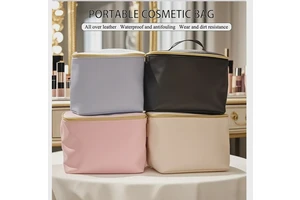
How to Comply with TSA's Strict Makeup Bag Rules and Keep Your Cosmetics?
Introduction
SERPs for TSA makeup bag rules often summarize the 3-1-1 guideline or list compliant products, but they seldom provide practical steps for compliance, such as classifying ambiguous cosmetics, avoiding common mistakes, or leveraging exceptions to retain items. This intent gap is crucial because travelers risk losing valuable cosmetics due to misclassification or poor packing, increasing costs and inconvenience; filling it with detailed strategies empowers users to navigate rules effectively, preserving their routines without disruptions.
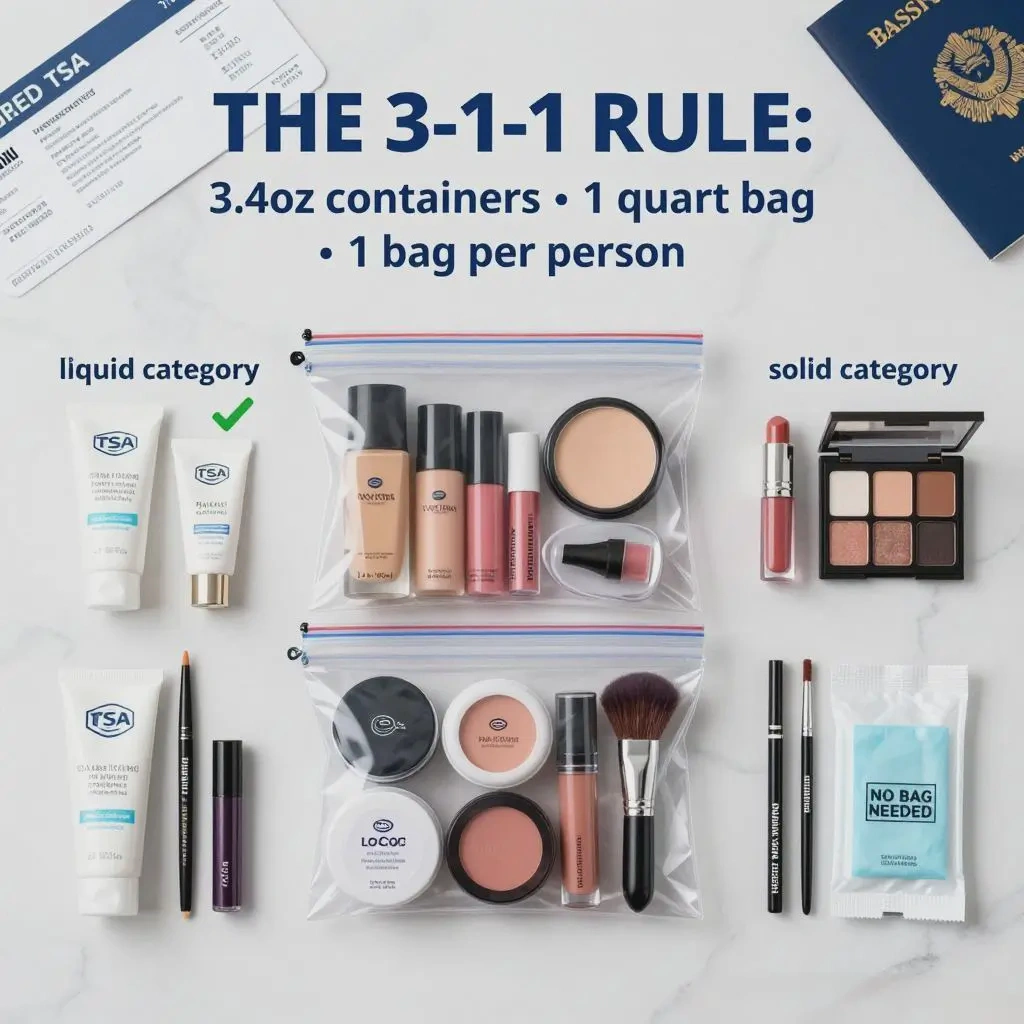
Basic Concepts
TSA's strict rules for cosmetics in carry-on luggage stem from the 3-1-1 liquids policy, limiting containers of liquids, gels, aerosols, creams, and pastes to 3.4 ounces (100 milliliters) or less, all in one quart-sized, clear, resealable plastic bag per passenger. Cosmetics classified as liquids include foundation, mascara, lip gloss, gel eyeliner, and cream blush due to their pourable or spreadable nature. Solids like powder foundation, lipstick, eyeshadow palettes, and solid perfumes are unrestricted and can be packed outside the bag. Powders exceeding 12 ounces require separate screening. The bag facilitates quick visual checks, and non-compliance can result in confiscation. Exceptions exist for medically necessary cosmetics, which must be declared, and duty-free purchases in tamper-evident bags with receipts.
Technical Principle
Complying with rules involves item assessment, packing optimization, and checkpoint preparation. The text flowchart below details this:
Start -> Classify Cosmetics (Liquids/gels: restricted; Solids: exempt; Aerosols: restricted) -> Measure Volumes (≤3.4 oz for restricted; Use scales/labels) -> Select Bag (Quart-sized, clear, resealable; No multiples) -> Pack Restricted Items (Fit all in one bag; Seal to avoid leaks) -> Identify Exceptions (Medical: declare with proof; Duty-free: tamper-evident) -> Prepare for Screening (Remove bag; Have solids accessible) -> Handle Flagged Items (Explain classifications; Accept if non-compliant) -> End.
This ensures retention by prioritizing accurate categorization and exceptions.
Table / Comparison
The table contrasts cosmetic types for TSA compliance, highlighting retention strategies.
| Type | Examples | Restriction Level | Retention Strategy | Common Pitfall |
|---|---|---|---|---|
| Liquids/Gels | Foundation, mascara, eyeliner | High | Decant to 3.4 oz; One bag | Misclassifying creams |
| Creams/Pastes | Blush, concealer, lip gloss | High | Use travel sizes; Seal tightly | Leakage during transit |
| Aerosols | Setting spray | High | ≤3.4 oz; Non-flammable preferred | Pressure changes in flight |
| Solids/Powders | Lipstick, eyeshadow | Low | Pack outside bag; <12 oz | Over 12 oz screening |
| Tools/Accessories | Brushes, sponges | None | Unlimited; Clean before pack | Contamination flags |
Liquids require strict measures to retain, unlike solids.
Checklist
To comply and keep cosmetics:
- Inventory items: Separate liquids/gels from solids/powders.
- Verify sizes: Use scales to confirm ≤3.4 oz; discard or check non-compliant.
- Choose bag: Opt for durable, clear quart-sized; avoid overfilling.
- Decant products: Transfer to leak-proof containers; test seals.
- Declare exceptions: Prepare medical notes or duty-free receipts.
- Organize carry-on: Keep bag accessible; solids in separate pouch.
- Review rules: Check TSA site for updates before travel.
This checklist facilitates smooth passage.
Case Studies
A Reddit user described packing makeup with liquids in a quart bag but had cream blush confiscated due to overfill; learning to decant allowed retention on return flights.
In a travel forum, a traveler with prescription acne cream declared it with a doctor's note, keeping it outside the bag without issues, illustrating medical exception success.
One account involved duty-free foundation over 3.4 oz in a tamper-evident bag; presenting the receipt prevented confiscation at U.S. entry.
Advanced Analysis
SERPs outline basics but underexplore practical retention tactics, such as using solid alternatives (e.g., stick foundation) to bypass bag limits entirely, potentially saving 20-30% of items from restriction. This gap neglects consistency tests—if an item smears or pours, it's liquid—leading to surprises. For international travel, aligning with similar global rules (e.g., EU 100 ml) avoids connection problems, while reusable silicone pods for creams enhance organization, addressing needs for eco-conscious or frequent travelers by reducing waste and simplifying compliance.
Conclusion
Complying with TSA's makeup bag rules to keep cosmetics requires understanding classifications, precise packing, and exceptions. Through methodical approaches, travelers can maintain their essentials effectively.