How to Follow Gel and Liquid Product Regulations for Carry-On Makeup?
Introduction
SERPs for carry-on makeup regulations typically outline the TSA's 3-1-1 rule or suggest travel-sized products, but they often lack in-depth instructions on following gel and liquid restrictions, such as precise classification methods, decanting techniques, or navigating international variations. This intent gap is important because missteps can lead to confiscated items or screening delays, adding unnecessary stress and costs for travelers; providing a thorough guide helps users comply accurately, preserving their cosmetics while streamlining the process.
Basic Concepts
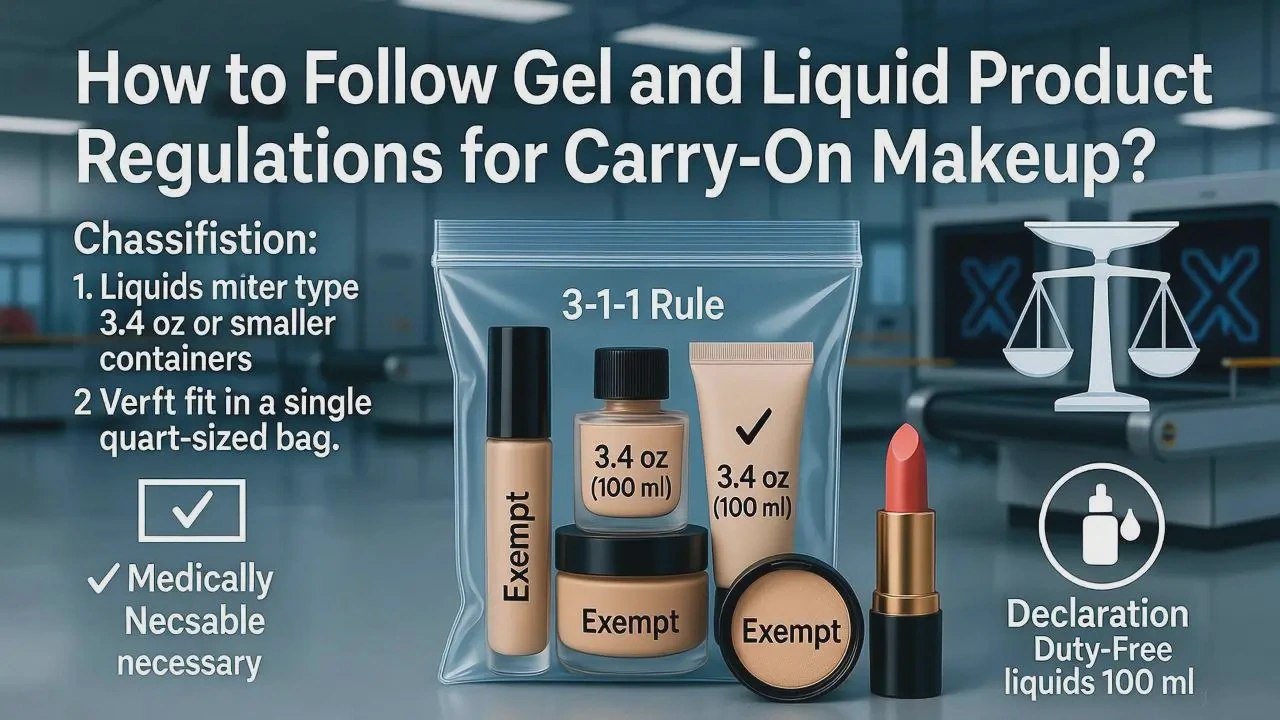
Gel and liquid product regulations for carry-on makeup are governed by the TSA's 3-1-1 rule, which limits containers to 3.4 ounces (100 milliliters) or less, all fitting into one quart-sized, clear, resealable plastic bag per passenger. Gels and liquids include mascara, liquid foundation, gel eyeliner, lip gloss, and cream-based items due to their spreadable or pourable nature. These must be in the bag during screening. Solids like powder foundation or lipstick are unrestricted. Aerosols, such as setting sprays, follow the same volume limits. Medical gels or liquids can be exempted with declaration, and duty-free purchases may be allowed in tamper-evident bags with receipts. The quart bag, roughly 7.5 x 8 inches, aids visual inspection, with no multiple bags permitted per person.
Technical Principle
Following regulations requires item identification, volume confirmation, and packing adherence. The text flowchart below illustrates this:
Start -> Identify Products (Gels/liquids: mascara, foundation; Solids: powder, lipstick) -> Confirm Volumes (≤3.4 oz/100 ml; Use scales/labels for accuracy) -> Prepare Bag (Quart-sized, clear, resealable; No multiples) -> Pack Restricted Items (Place gels/liquids in bag; Seal to prevent spills) -> Handle Exemptions (Declare medical with proof; Duty-free in tamper-evident) -> Screen Preparation (Remove bag from carry-on; Solids accessible) -> Troubleshoot (If flagged, explain; Repack post-screening) -> End.
This ensures compliance by methodically addressing each step.
Table / Comparison
The table compares gel/liquid makeup items for carry-on regulations, highlighting compliance needs.
| Item Type | Examples | Regulation | Compliance Method | Retention Risk |
|---|---|---|---|---|
| Gels/Liquids | Mascara, gel eyeliner, foundation | 3.4 oz max in quart bag | Decant to small containers | High if overfilled |
| Creams | Cream blush, concealer | 3.4 oz max in quart bag | Test spreadability; Seal well | Medium from leaks |
| Aerosols | Setting spray | 3.4 oz max in quart bag | Choose non-pressurized alternatives | High from pressure |
| Solids | Lipstick, powder foundation | No restrictions | Pack outside bag | Low |
| Medical | Prescription creams | Exemption with declaration | Provide doctor's note | Low if declared |
Gels and liquids pose higher risks, requiring strict measures.
Checklist
To follow regulations effectively:
- Classify items: Determine gels/liquids vs. solids based on consistency.
- Measure accurately: Use kitchen scales; confirm ≤3.4 oz/100 ml.
- Select bag: Choose durable, clear quart-sized; avoid opaque options.
- Decant strategically: Transfer to leak-proof bottles; label contents.
- Prepare exemptions: Gather medical documentation or duty-free receipts.
- Test packing: Fit items without bulging; shake for leak checks.
- Organize luggage: Keep bag at top; solids in separate compartments.
- Stay updated: Check TSA website pre-flight for revisions.
This checklist supports seamless adherence.
Case Studies
One traveler packed gel eyeliner and cream concealer in 3 oz containers within the quart bag, passing screening after agents verified volumes visually, but noted a lip gloss was confiscated for exceeding limits without decanting.
In another instance, a passenger with medical face cream declared it with a prescription label, allowing it outside the bag; this exemption prevented loss during a domestic flight.
A duty-free setting spray over 3.4 oz in a tamper-evident bag was retained with the purchase receipt, demonstrating how post-security buys can bypass standard restrictions if untampered.
Advanced Analysis
SERPs provide general advice but underexplore advanced compliance, such as using consistency tests—if a product flows or smears, it's restricted—or opting for solid swaps like powder alternatives to minimize bag usage, potentially avoiding 20-30% of issues. This gap neglects international nuances, where EU rules align with 100 ml but may differ on aerosols. Strategies like reusable silicone pods for gels or multi-use sticks enhance retention, addressing needs for eco-friendly or budget-conscious travelers by reducing repurchases after confiscations.
Conclusion
Following gel and liquid regulations for carry-on makeup centers on the 3-1-1 rule, accurate classification, and exemptions. By applying structured methods, users can keep their cosmetics intact for uninterrupted travel.