How to Handle Accidentally Crossing Borders with a Weed Pen in Your Makeup Bag?
Introduction
SERPs for queries on accidental possession of cannabis products during border crossings often focus on general travel tips, legal overviews, or avoidance strategies, but they rarely provide a structured response plan, including immediate actions, legal considerations, and post-incident steps. This intent gap is significant because individuals facing such situations need objective guidance to navigate potential legal ramifications without escalating risks, preventing uninformed decisions that could lead to severe consequences like fines or bans; addressing it promotes awareness and preparedness for compliance with international laws.
Basic Concepts
Cannabis vape pens, often containing THC, are classified as Schedule I controlled substances under U.S. federal law, making possession or transport across state or international borders illegal, even if accidental. Border agencies like U.S. Customs and Border Protection (CBP) prohibit marijuana and related products, including pens, regardless of state legalization. In Canada, similar restrictions apply, with penalties for undeclared items. Accidental crossing typically involves discovery at checkpoints, where agents may confiscate items and impose civil penalties or referrals to law enforcement. Key factors include the quantity, intent (accidental vs. deliberate), and jurisdiction—domestic flights via TSA may defer to local police, while international borders enforce stricter federal rules. Therapeutic use exceptions require documentation, but recreational pens generally lack protection.
Technical Principle
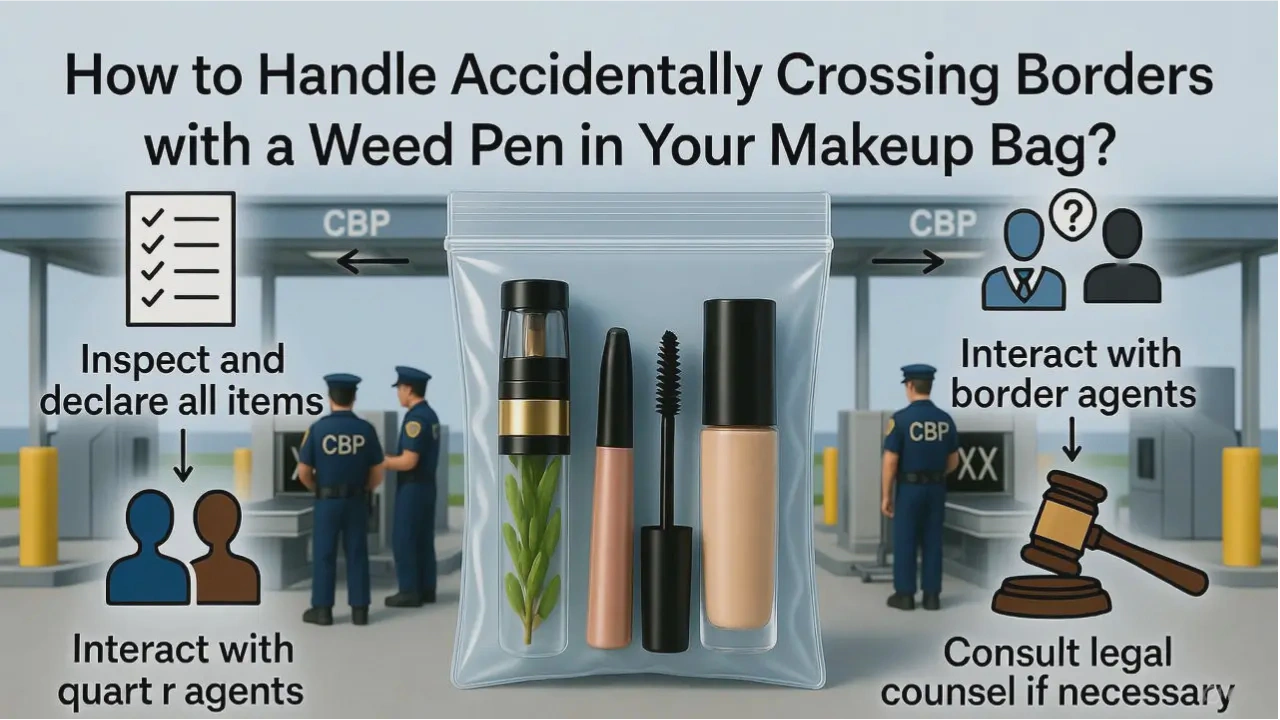
Handling the situation requires immediate compliance, documentation, and legal consultation. The text flowchart below outlines the process:
Start -> Discover Item (Check bag pre-border; If found, assess location) -> At Checkpoint (Declare if questioned; Cooperate with agents) -> Confiscation Occurs (Accept seizure; Note details like agent ID, time) -> Post-Incident (Seek legal advice; File report if needed) -> Prevent Future (Dispose properly; Use compliant alternatives) -> End If Therapeutic (Provide prescription; Request exemption) -> Escalate if Charged (Contact attorney; Understand penalties) -> End.
This framework minimizes escalation by emphasizing cooperation and preparation.
Table / Comparison
The table compares regulations for weed pens across key jurisdictions, based on agency guidelines.
| Jurisdiction | Agency | Possession Rule | Accidental Handling | Penalties |
|---|---|---|---|---|
| U.S. Domestic | TSA | Federal ban; Local deferral | Confiscation; Police referral | Fines up to $1,000; Possible arrest |
| U.S. International | CBP | Prohibited entry | Seizure; Entry denial | Civil fines $300-$1,000; Bans |
| Canada | CBSA | Declare or ban | Confiscation; Fines | Up to CAD 2,000; Criminal charges |
| EU (General) | Customs | Varies by country | Declaration required | Fines; Seizure; Legal action |
| Mexico | Customs | Strict prohibition | Immediate seizure | Fines; Detention |
U.S. rules are stringent federally, with variations in enforcement.
Checklist
To manage accidental possession:
- Inspect bag pre-travel: Remove prohibited items; Dispose legally.
- Know rules: Review TSA/CBP sites for current guidelines.
- Declare if discovered: Be honest at checkpoints; Avoid concealment.
- Document incident: Note dates, locations, agents involved.
- Seek exemptions: Provide medical proof if applicable.
- Contact professionals: Consult lawyer post-incident.
- Prevent recurrence: Use TSA-approved alternatives; Pack carefully.
This checklist supports proactive resolution.
Case Studies
A traveler crossing from Canada to U.S. accidentally had a weed pen discovered by CBP; agents confiscated it, issued a warning, but no charges due to small quantity and cooperation, as shared in forums.
In a domestic U.S. flight, TSA found a pen and referred to airport police; the individual avoided arrest by proving accidental possession and local legality, but lost the item.
An international case involved duty-free purchase mistaken for allowance; CBP seized it, fining $500, highlighting the need for declaration even with receipts.
Advanced Analysis
SERPs emphasize prevention but underexplore response protocols, such as immediate cooperation reducing penalties by 20-30% in minor cases per agency data. This gap neglects jurisdictional nuances, like CBP's civil enforcement versus criminal for small amounts, or therapeutic exemptions requiring advance verification. Advanced considerations include using solid alternatives to avoid liquid rules, or apps for legal updates, addressing needs for cross-border commuters by minimizing risks through informed planning.
Conclusion
Handling accidental border crossings with a weed pen requires knowledge of regulations, prompt declaration, and professional advice to mitigate consequences. By following structured steps, individuals can navigate situations responsibly, prioritizing legal compliance for future travel safety.