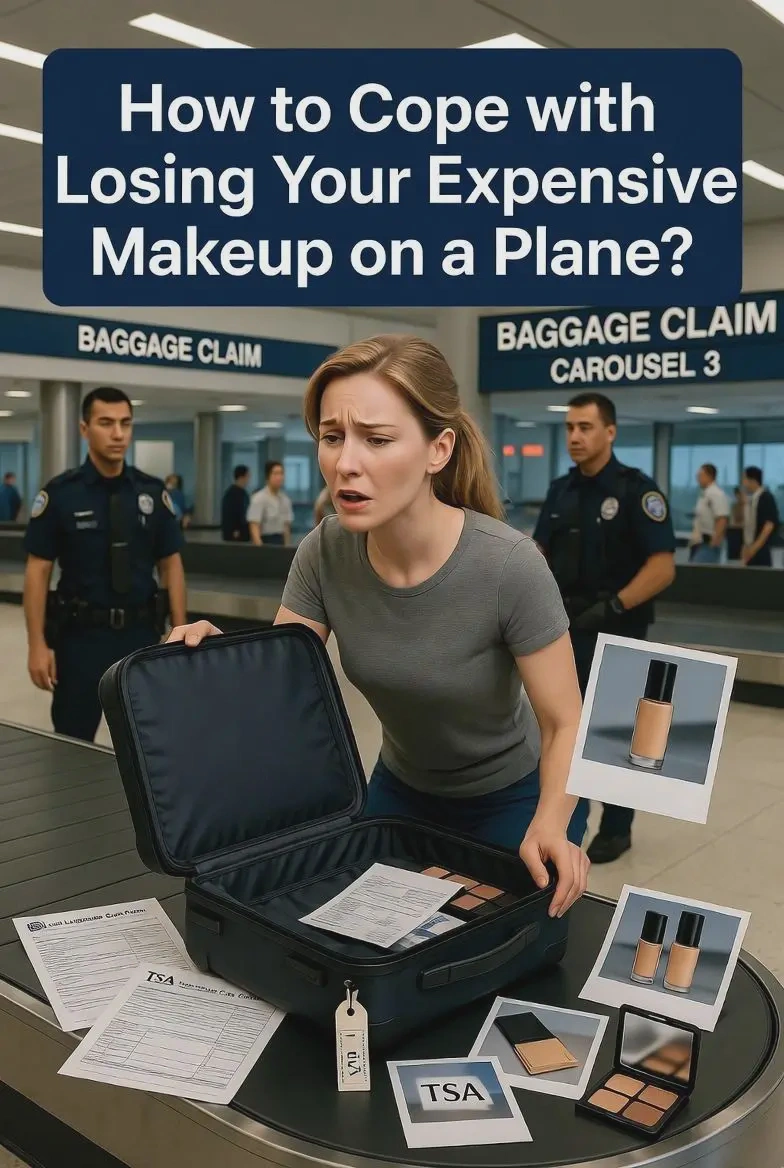
How to Cope with Losing Your Expensive Makeup on a Plane?
Introduction: Addressing SERP Intent Gaps in Recovery Strategies
Users searching for ways to cope with losing expensive makeup on a plane often encounter SERPs with general lost luggage tips or airline overviews, but these lack detailed recovery processes, such as distinguishing airline handling from TSA inspections or leveraging insurance for high-value items. This shortfall can prolong stress, delay reimbursements, or result in unrecovered losses, especially for premium cosmetics vulnerable to damage or theft. Closing this gap is vital for travelers, offering structured approaches to documentation, claims, and prevention, enabling effective resolution and future safeguards.
Basic Concepts: Understanding Loss Scenarios and Responsibilities
Technical Principles: Claims and Recovery Mechanisms
Recovery involves evidence collection, timely filing, and liability assignment, with airlines using tracking systems for lost bags and TSA limited to screening-related damage. Principles include valuation (depreciated cost) and documentation (photos for proof).
Text-based Flowchart for Coping Process:
- Discover loss → Note details (flight number, baggage tag; check for TSA notice).
- Report immediately → File at airport baggage service (within 7 days for damage; 21 for loss).
- Document evidence → Photograph empty space/damage; retain receipts and appraisals.
- Determine liability → If TSA notice, file with TSA; otherwise, airline or insurance.
- Submit claim → Use online forms (airline within 45 days; insurance per policy).
- Follow up → Track status; appeal denials with additional proof.
This sequence, based on procedural guidelines, streamlines reimbursement.
Table Comparison: Airline vs. Travel Insurance Claims
| Aspect | Airline Claims | Travel Insurance Claims |
|---|---|---|
| Coverage Trigger | Lost/damaged during handling | Lost valuables, often including airline gaps |
| Timeline for Filing | 7-21 days from incident | Varies, typically 30-90 days |
| Required Evidence | Photos, baggage tag, receipts | Receipts, police report if theft |
| Compensation Limits | $3,800 domestic; $1,700 international | Policy-specific, up to $500-2,000 per item |
| Processing Time | 30-90 days | 15-60 days |
| Exclusions | Wear/tear, unchecked items | Pre-existing damage, high-risk activities |
This comparison illustrates insurance's role in supplementing airline limits for expensive makeup.
Checklist: Immediate and Follow-Up Actions
- On-Site Reporting: Alert airline baggage desk; obtain property irregularity report.
- Evidence Gathering: Photograph loss site, items (if partial), and tags; note witnesses.
- Valuation Assessment: Compile receipts/appraisals for makeup value.
- Liability Check: Look for TSA notice; if present, contact TSA separately.
- Claim Submission: File with airline online; include all documentation.
- Insurance Review: Check policy for coverage; submit if airline denies.
- Follow-Up Monitoring: Track claim status weekly; provide additions if requested.
This checklist facilitates organized recovery.
Case Studies: Real Traveler Resolutions
Case 1: Delayed Baggage with Makeup Loss A traveler's bag arrived two days late with missing items; filing an airline claim with receipts recovered $200 for replacements, supplemented by insurance for the rest.
Case 2: Damaged Cosmetics in Inspected Bag TSA notice indicated screening; submitting photos and valuations to TSA led to partial reimbursement after 4 months, highlighting evidence importance.
Case 3: Permanent Loss on International Flight Full bag loss prompted Montreal Convention claim; detailed inventory and police report secured $1,500, with insurance covering excess value.
These cases demonstrate evidence-driven successes.
Advanced Analysis: Enhancing Prevention and Maximizing Recovery
SERPs frequently ignore advanced tactics like using traceable tags or high-value declarations, focusing on basics over valuation strategies. For $3000 makeup, pre-travel appraisals fill proof gaps, while airline apps for real-time tracking prevent prolonged delays. Insurance riders for valuables address standard policy limits, absent in general advice. Psychological factors, like immediate reporting reducing denial rates, guide proactive choices. This analysis provides a comprehensive approach for future-proofing collections.
Conclusion
Coping with lost expensive makeup on a plane requires prompt reporting, thorough documentation, and targeted claims through airlines or insurance. Structured processes ensure maximum recovery, addressing vulnerabilities effectively.